Can a modular habitat built for outdoor hospitality host guests all year round, not only during peak season? NÖMA's own positioning says yes by design: the Resort Collection is presented on the site as "designed for year-round hotel use," and the dedicated page for outdoor hospitality professionals lists "year-round operation" among the strengths of the offer. That is a design commitment, not a quantified thermal-performance guarantee: no public data specifies, model by model, how many hours of winter comfort to expect or what a season's heating costs would be. What follows separates what is actually documented from what has to be treated as a principle rather than a promise.
Understanding the topic
In outdoor hospitality more broadly, operating accommodation outside peak season, and especially through winter, is generally tied to the same technical factors: reinforced insulation, double glazing, and a heating system genuinely sized for cold weather. That is confirmed, for instance, by the professional portal CampingFrance.com, published by France's National Federation of Outdoor Hospitality, when discussing winter-open accommodation. It is not, however, a single binding numerical standard: none of the sources consulted set a specific thermal-performance threshold for this type of accommodation.
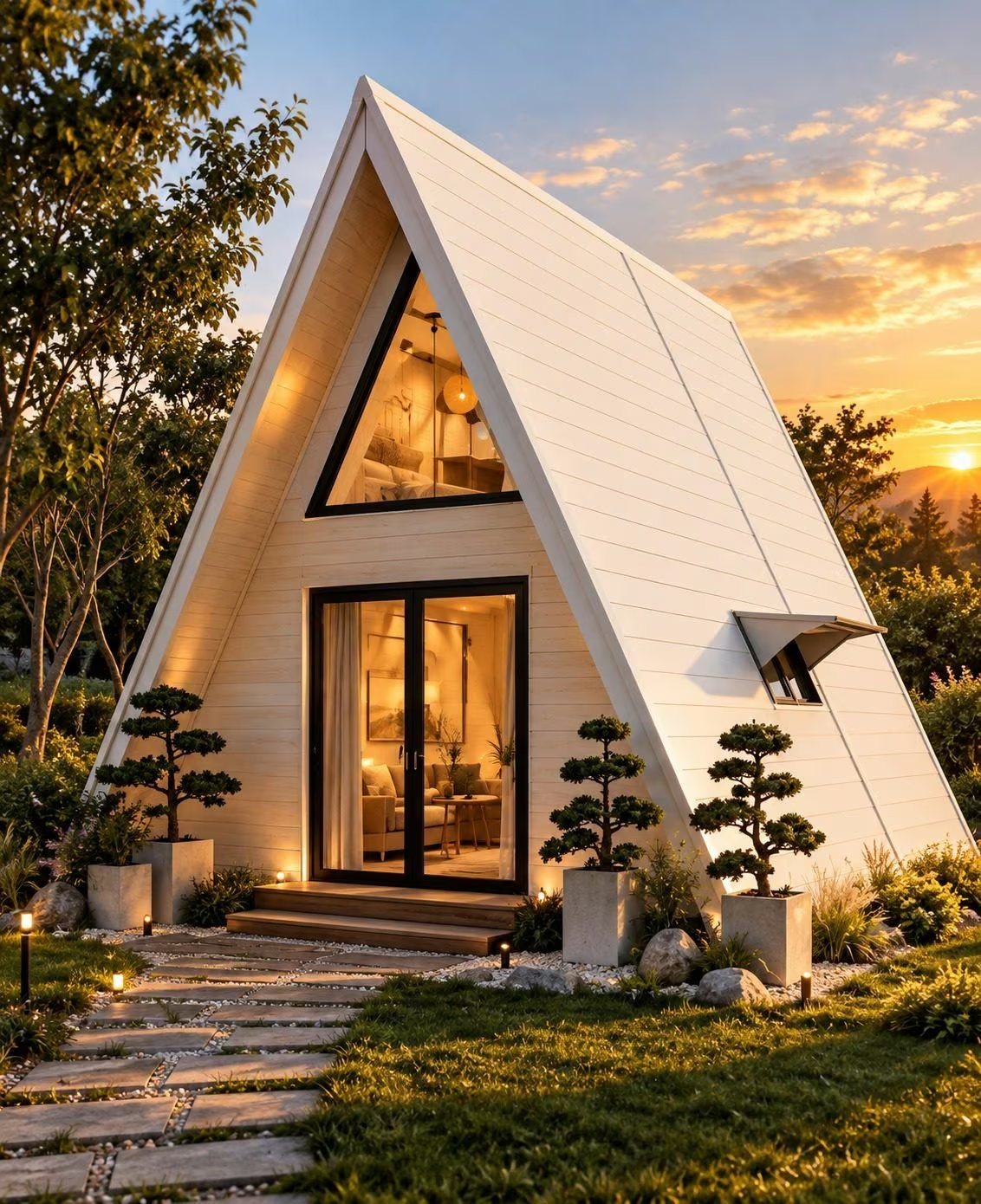
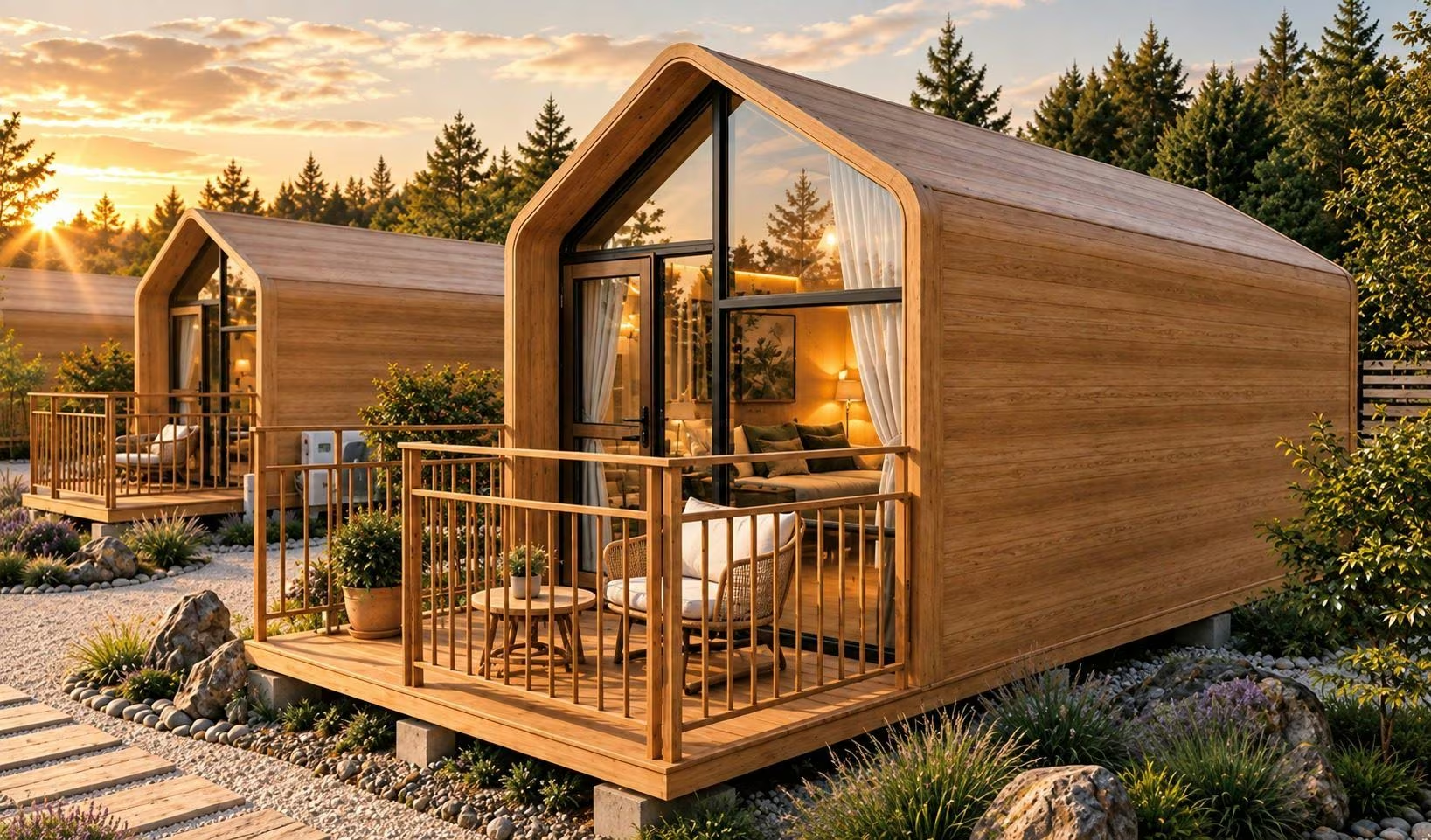
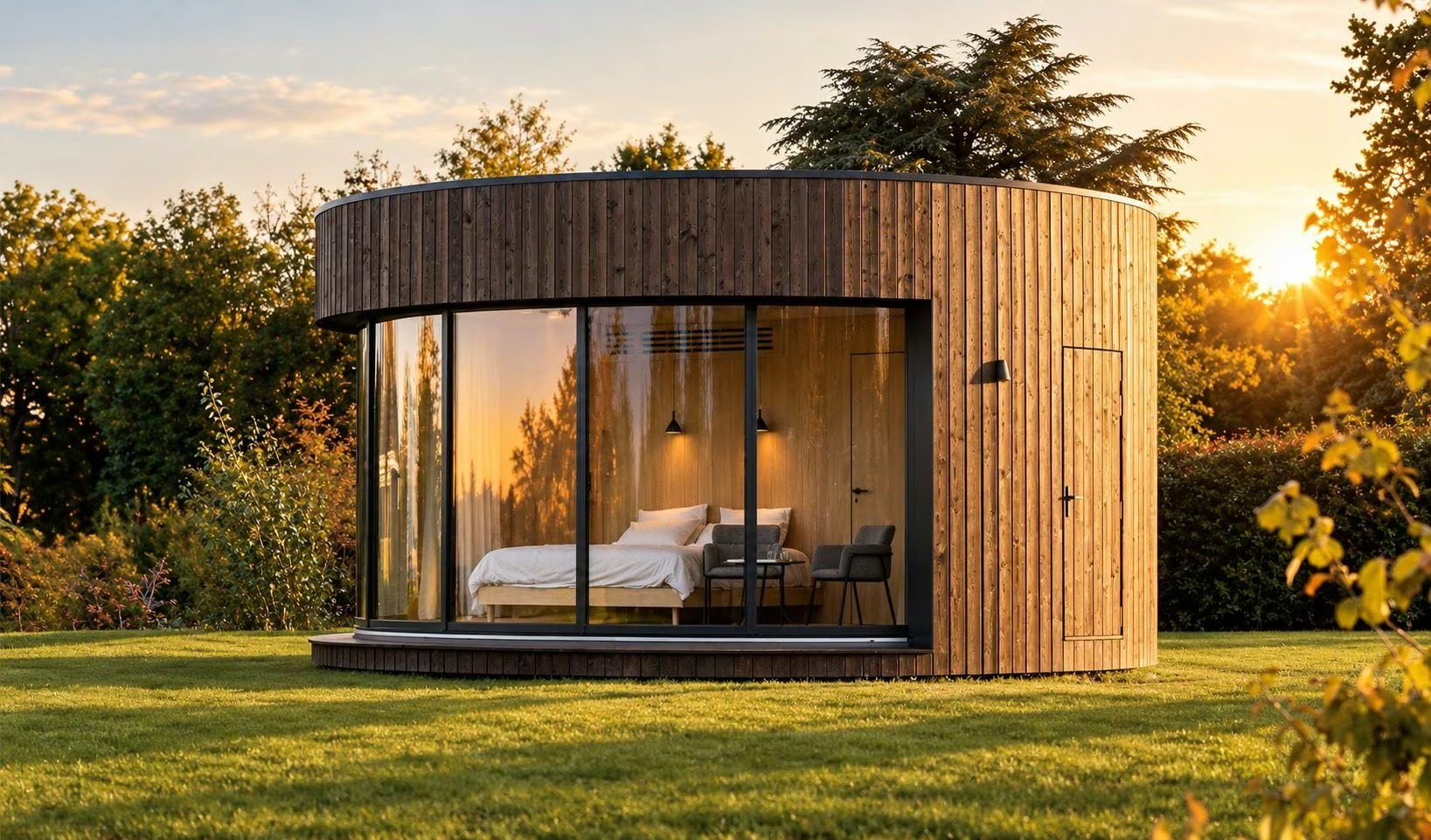
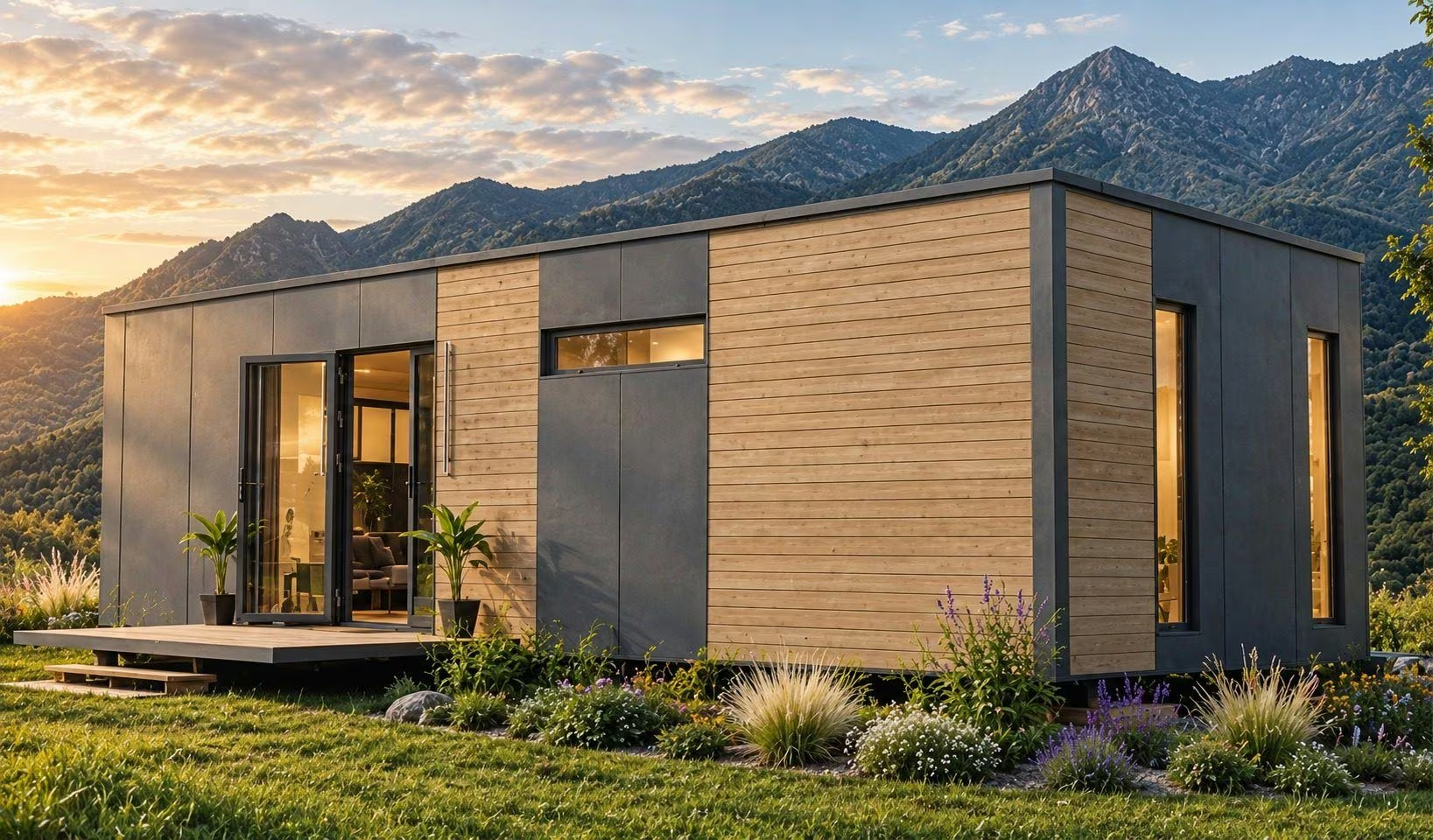
On this first point, the insulated envelope, the eight Resort Collection models (Glass, Span, Pod, Level, Block, Vista, Scope and Frame) share a documented baseline: a galvanised steel structure and insulation described as "high-performance" or "high-performance thermal insulation" on each model's product page, paired with double glazing. Frame is the exception here: its product page documents no insulation or glazing characteristics comparable to the other seven models, a point that stays NOT AVAILABLE rather than resolved by assumption.
Deep exploration
Heating and air conditioning follow a different rule, and it's the point most often misread. Among the Resort Collection models, only Nöma Span, Nöma Pod and Nöma Vista document an included "Heating / Air conditioning" system in their characteristics. For Glass, Level, Block and Scope, this isn't publicly documented at this time, which should never be read as an absence of heating, only as information NÖMA hasn't yet published model by model. For Frame, whose interior fit-out isn't documented at all, the same caution applies even more strongly.
Beyond what a product page documents, whether year-round operation is actually workable also depends on site-specific factors: how harsh the local climate is, the exposure and orientation of the units, protection from the prevailing wind, and winter site access (snow, ice). Two operators installing the same model in two different climate regions won't necessarily get the same level of winter comfort without adjustment, a general construction principle, not something unique to modular housing.
The operating costs tied to year-round opening (heating, winter upkeep, any frost protection for utilities) aren't publicly documented by NÖMA at this time: DATA NOT AVAILABLE. The dedicated outdoor-hospitality page highlights reduced upkeep over time, linked to material choice, but that claim concerns material durability, not a quantified winter operating cost; the two shouldn't be confused.
Practical guidance
For an operator weighing a year-round opening, the question breaks down into three steps: check, model by model, what is actually documented (insulation, glazing, heating) on the model being considered; assess site-specific constraints (climate, exposure, winter access) independently of the product page; and request a quote that explicitly includes the equipment needed for off-peak operation rather than assuming it matches the standard configuration. This question connects directly to how many units to deploy on a tourist site, covered in our article on how many units to deploy: seasonality of operation and fleet sizing are two linked decisions.
Year-round operation, then, isn't a question a modular model answers on its own, nor a promise to take at face value without checking model by model. It's the result of matching what a manufacturer actually documents against what each site requires. Our Resort Collection was built for outdoor hospitality; our dedicated professional team can help assess the right configuration for off-peak operation.
Architectural perspective
Architecture designed for outdoor hospitality only delivers real value if what it promises year-round is as precise as what it promises at peak season: being rigorous about missing data matters as much as the ambition of the promise itself.