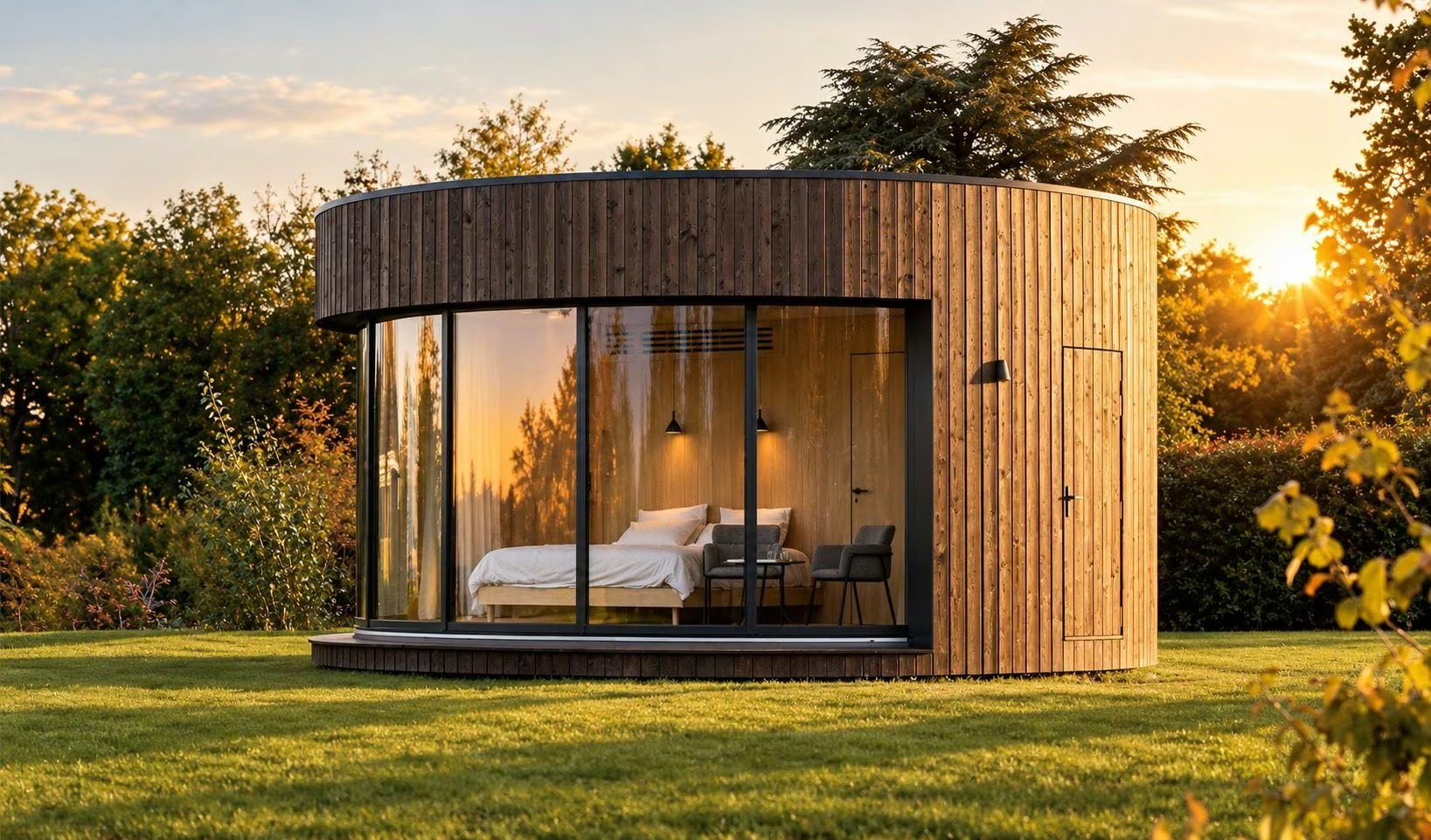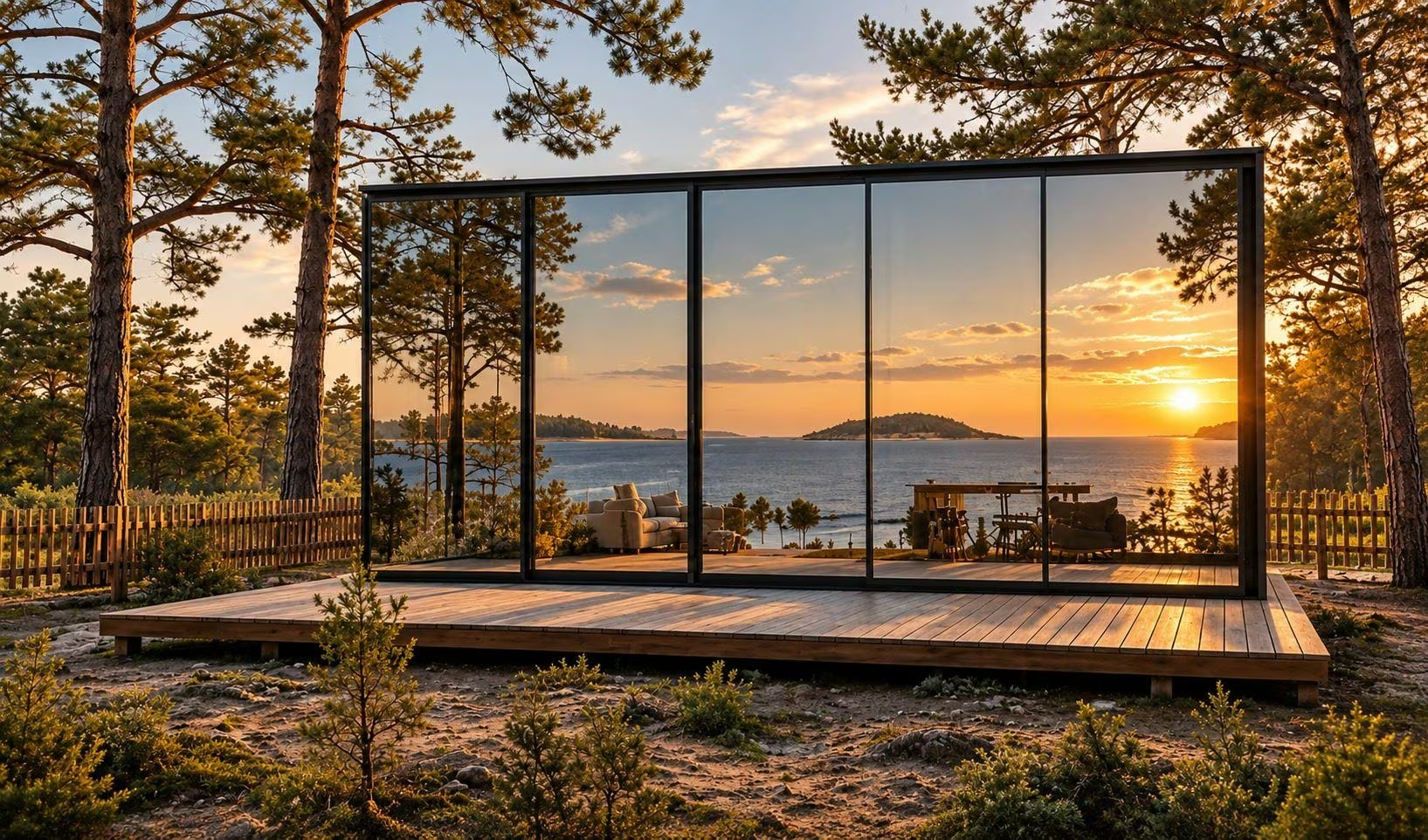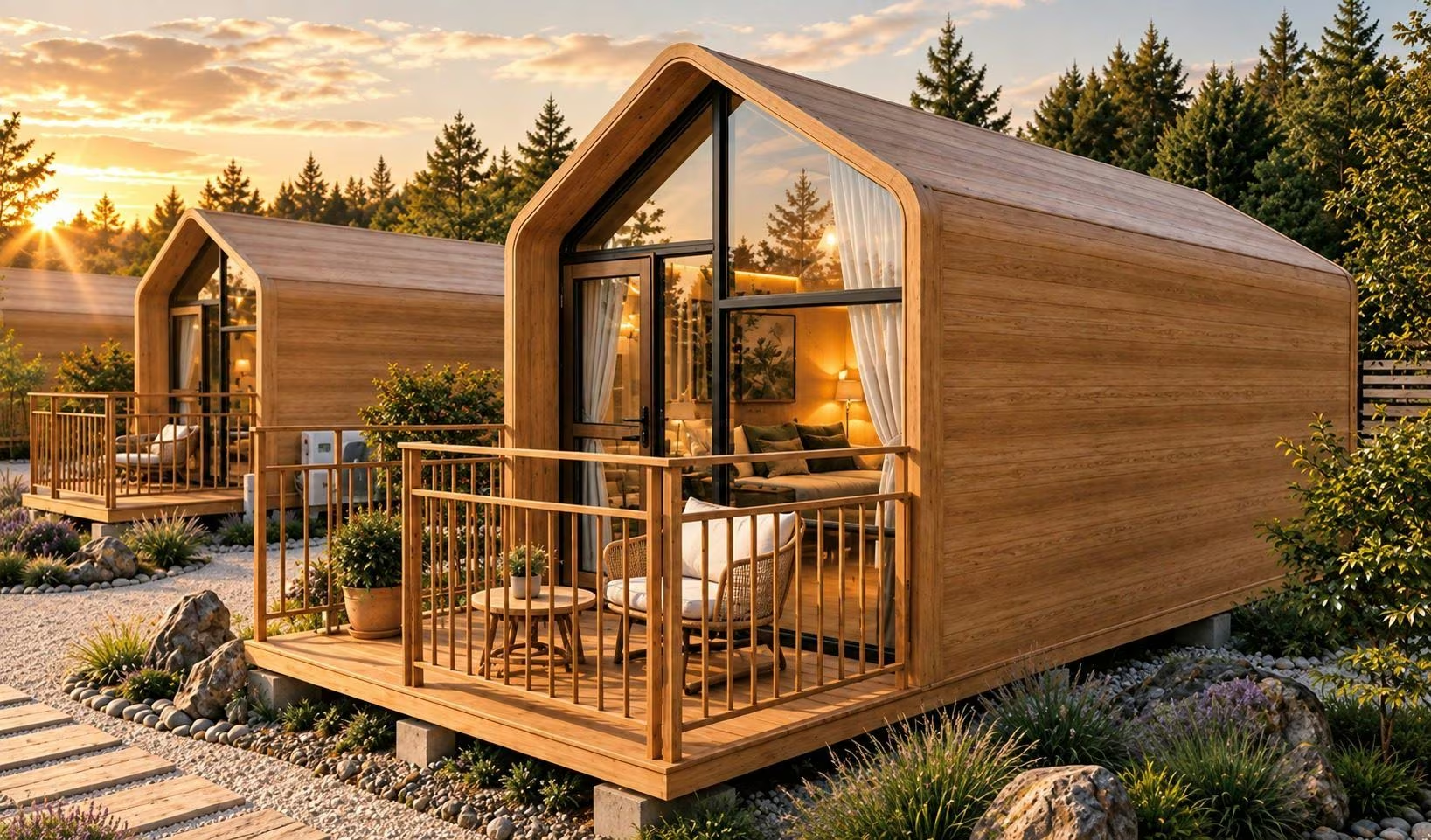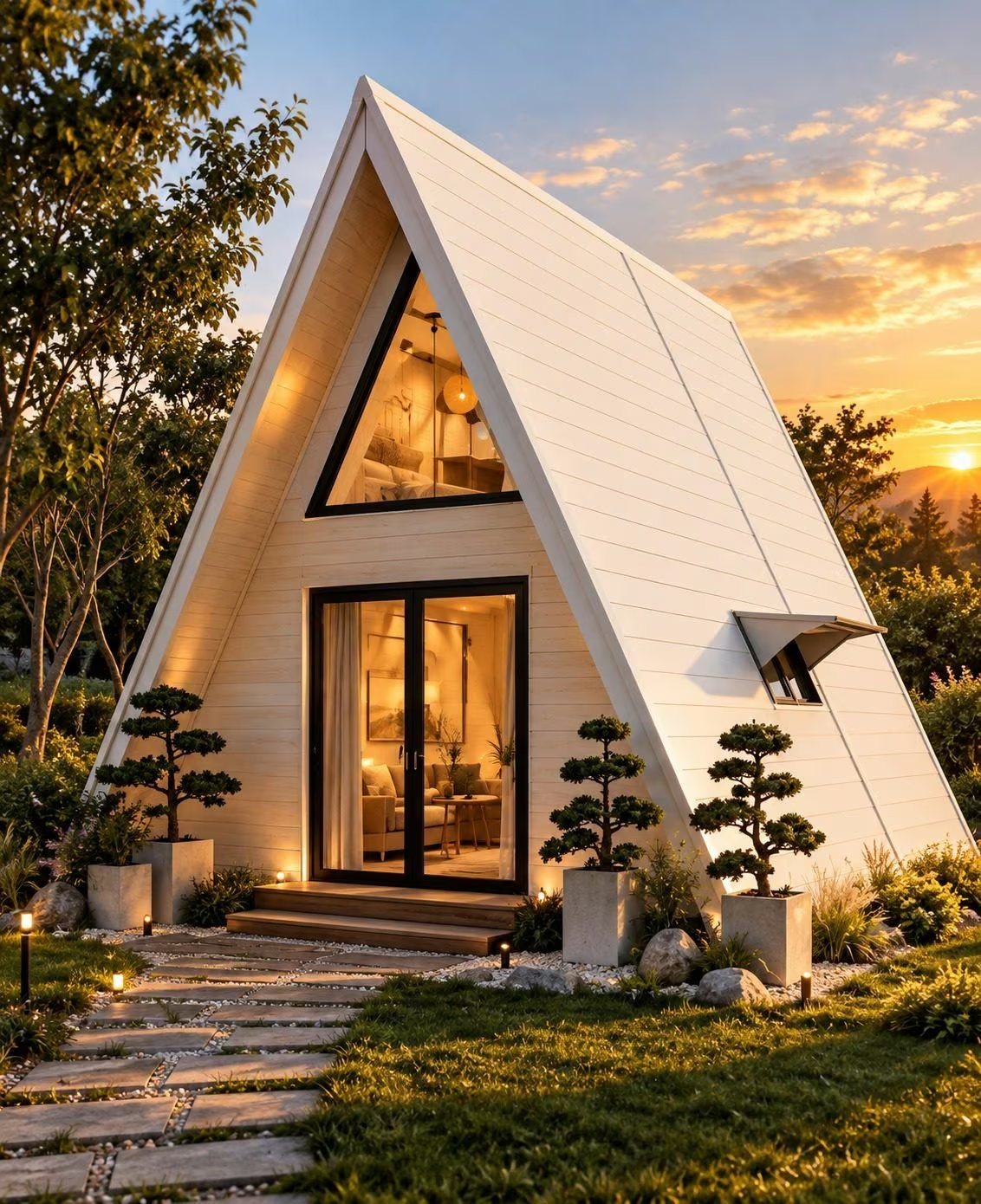
How many modular accommodation units can be installed on a tourist site? It's one of the first questions campsite, resort or estate operators ask themselves when considering adding units like those in Nöma's Resort Collection. There is no universal ratio that applies to every site: the number of units that can actually be installed depends on three families of criteria that combine rather than simply add up: the site's physical capacity, the regulation that applies to it, and the economic model the operation is aiming for.
Understanding the topic
The first limit is purely physical. Resort Collection models range from 25 to 99 m² on the ground, and each has its own footprint, on top of which come the safety distances between units, the circulation routes needed to transport and install the modules, and any shared spaces on the site. Before thinking in terms of a number of units, the total site area needs to be converted into the area actually available once these constraints are removed, which depends heavily on each plot's topography and accessibility. That's exactly what a site assessment checks before any manufacturing, a point detailed on our regulation and installation page.
The number of accommodation units also directly affects which administrative regime applies, with precise thresholds set by the French planning code (Code de l'urbanisme). For creating or extending a campsite, a full development permit (permis d'aménager) is required once a project exceeds 20 people or 6 pitches (article R. 421-19); below that threshold, a simple prior declaration is enough (article R. 421-23). Any extension that increases the number of pitches by more than 10% also falls under the development permit, whether for a campsite or a leisure residential park.
Deep exploration
One special case is worth knowing: the aire naturelle de camping, a lighter-touch regime reserved for small sites. Under the French tourism code (Code du tourisme), such a site cannot exceed one hectare for a maximum of 30 pitches, with a minimum of 300 m² per pitch, and an operating period capped at six months a year. These thresholds only apply to this specific regime: a classified hotel resort or an estate adding accommodation to an already-existing site falls under different rules, to be checked case by case with the relevant local planning department. None of these thresholds should be carried over mechanically from one type of site to another.
Beyond physical and regulatory capacity, the number of units also needs to answer to an economic logic specific to the intended operation. More units isn't automatically more profitable: every additional unit adds cleaning, maintenance and booking management costs, which need to be covered by an occupancy rate that's realistically achievable over the full year, not over the best month of the season, as we cover in more detail in our article on rental investment.
Practical guidance
Before setting a target number, four checks help frame the decision: measuring the area actually available once access and circulation constraints are removed; identifying, with the local planning department, which administrative regime applies to the site in question (prior declaration, development permit, or the rules of an already-classified establishment); checking the density thresholds specific to the site's category where relevant, the aire naturelle regime in particular; and modelling the economic case on a realistic annual occupancy rate rather than the best season.
This sizing work goes beyond what a simple per-unit price comparison can reveal: it's an exercise specific to each site, one that benefits from combining the operator's perspective, that of the relevant local authorities, and that of the accommodation manufacturer. That's exactly what the project assessment offered through our Outdoor Hospitality offer is designed to do: ground these criteria in facts rather than start from a number assumed in advance.
Architectural perspective
A tourist site is never simply an addition of boxes placed on a plot: each extra unit shifts the balance between density, guest experience and profitability. Starting from that tension, rather than a theoretical ratio, is how a modular accommodation project finds its right size.