Investing in a tiny house for tourist accommodation raises a different question than a second home or a long-term rental: profitability plays out over short cycles, much more frequent guest turnover, and obligations specific to tourism. Our article on the method for assessing a modular accommodation's profitability sets out the five criteria that apply to any compact rental project (location, seasonality, operating costs, local regulation, architectural appeal): this article applies them specifically to the tourist accommodation context of a tiny house, without repeating them in detail.
Understanding the topic
In a tourist context, location isn't judged only against a resident or employment catchment area, but against a visitor catchment area: proximity to a natural site, a coastline, a mountain area, or a cultural hub that draws a steady flow of visitors. The same plot can suit a second home while proving poorly suited to tourist operation if the area doesn't attract visitors outside the owner's own holidays.
Tourist seasonality is generally sharper than that of a long-term rental: a coastal or mountain location can show high occupancy over a few weeks of school holidays and sit largely empty the rest of the year. As our article on the method points out, good practice is to plan around a realistic annual average rather than the best weeks, which is especially true for accommodation built for tourist use.
Deep exploration
Short tourist stays multiply guest turnover compared with a long-term rental, and each turnover carries a cost: cleaning between stays, linen management, check-in or key handover, booking management across one or more platforms (often with a commission), insurance specific to tourist rental, and a tourist tax collected per night. These costs weigh proportionally heavier than in a standard long-term rental, where turnover is far less frequent: they must be fully deducted from gross income before drawing any conclusion about a project's profitability.
The regulation applicable to tourist accommodation varies by municipality. In certain communes, an owner wishing to let a property as a meublé de tourisme (furnished tourist accommodation) must file a declaration with the town hall, using form Cerfa n°14004*04, submitted on paper or through the commune's own online service where one exists, according to the official Service-Public.fr page dedicated to this declaration (last updated 21 May 2026). That page does not give an exhaustive list of the communes concerned or a rental-duration threshold: it is therefore necessary to check directly with the local town hall whether a declaration is required, before finalising a tourist accommodation project.
Practical guidance
At this stage, no NÖMA source allows us to state an occupancy rate or a numerical yield specific to tourist accommodation in a tiny house: these figures depend on too many factors specific to each plot, area and operating model to be generalised without risk of error. Likewise, no NÖMA case study or customer account is publicly available for this type of project, and no information on financing or a financial partnership is documented: these are details to obtain directly from qualified professionals (a bank, an accountant, the local authority), not figures to infer by extrapolation.
To build a complete assessment of a rental project, it remains useful to apply the five criteria detailed in our article on the method for assessing a modular accommodation's profitability and in our article on investing in rental accommodation, weighing them according to the tourist context described here. The pages for our models designed for rental use, such as Nöma Span, include an indicative rental yield simulator, a first approach to refine afterwards with a study specific to your own plot.
Architectural perspective
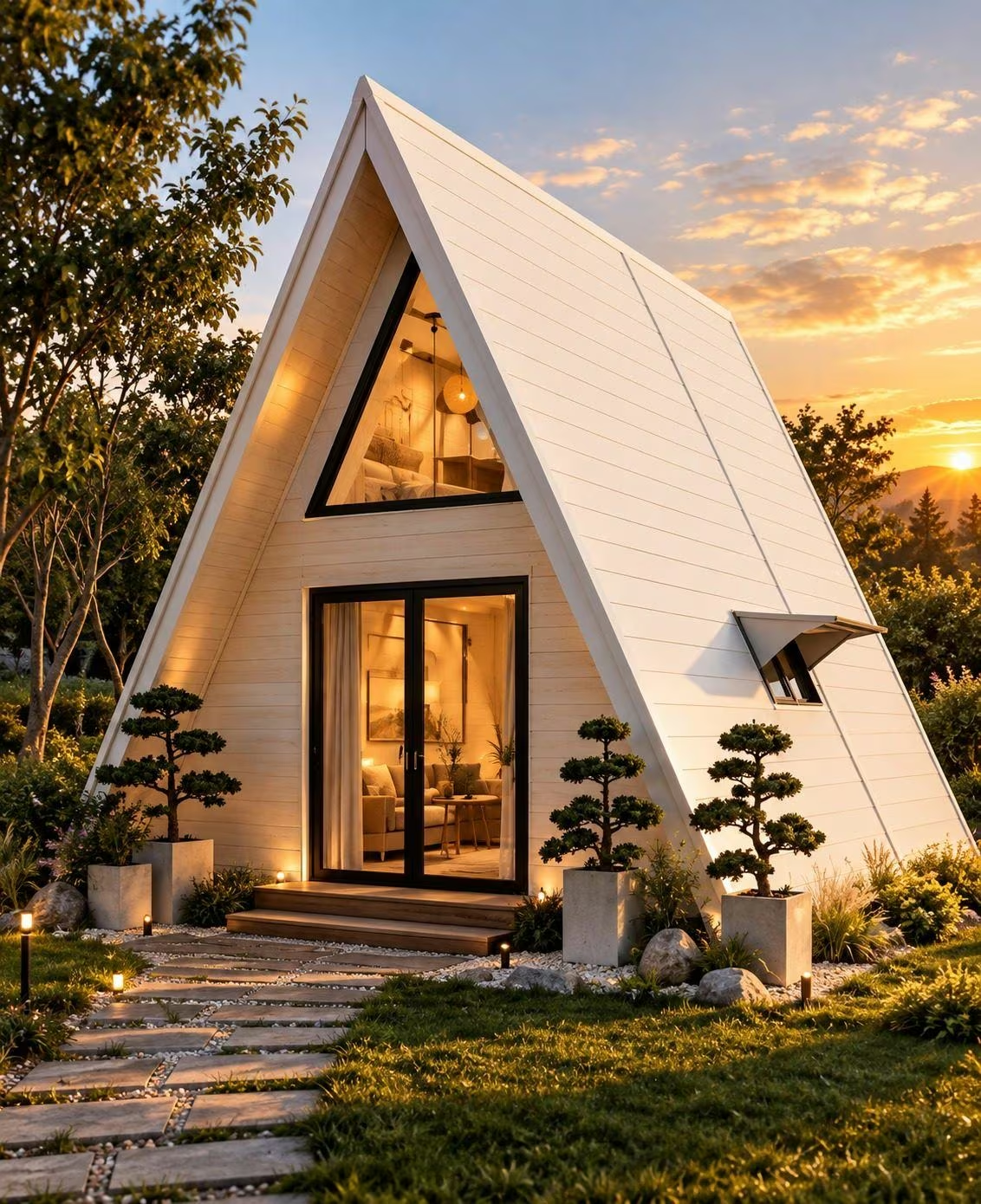
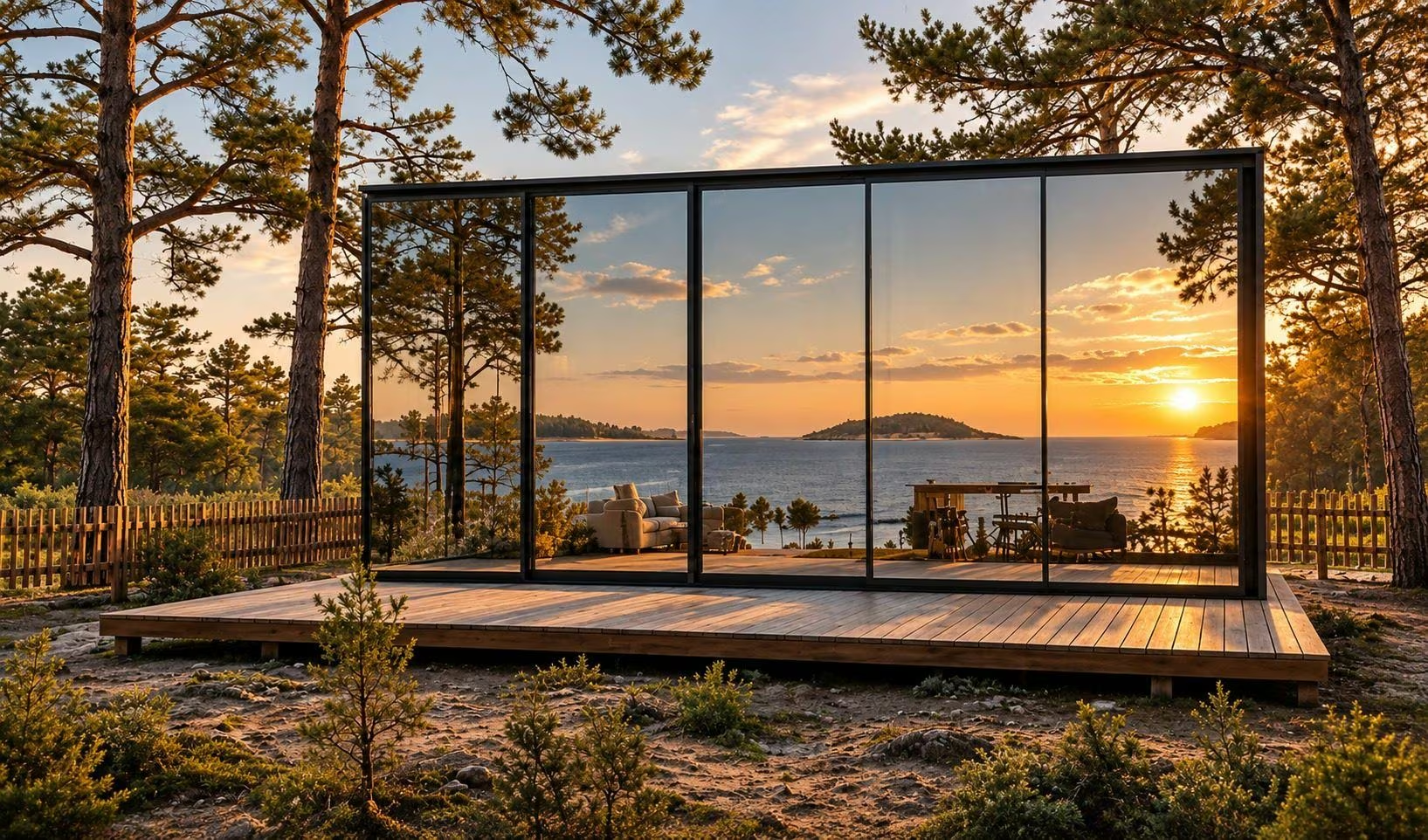
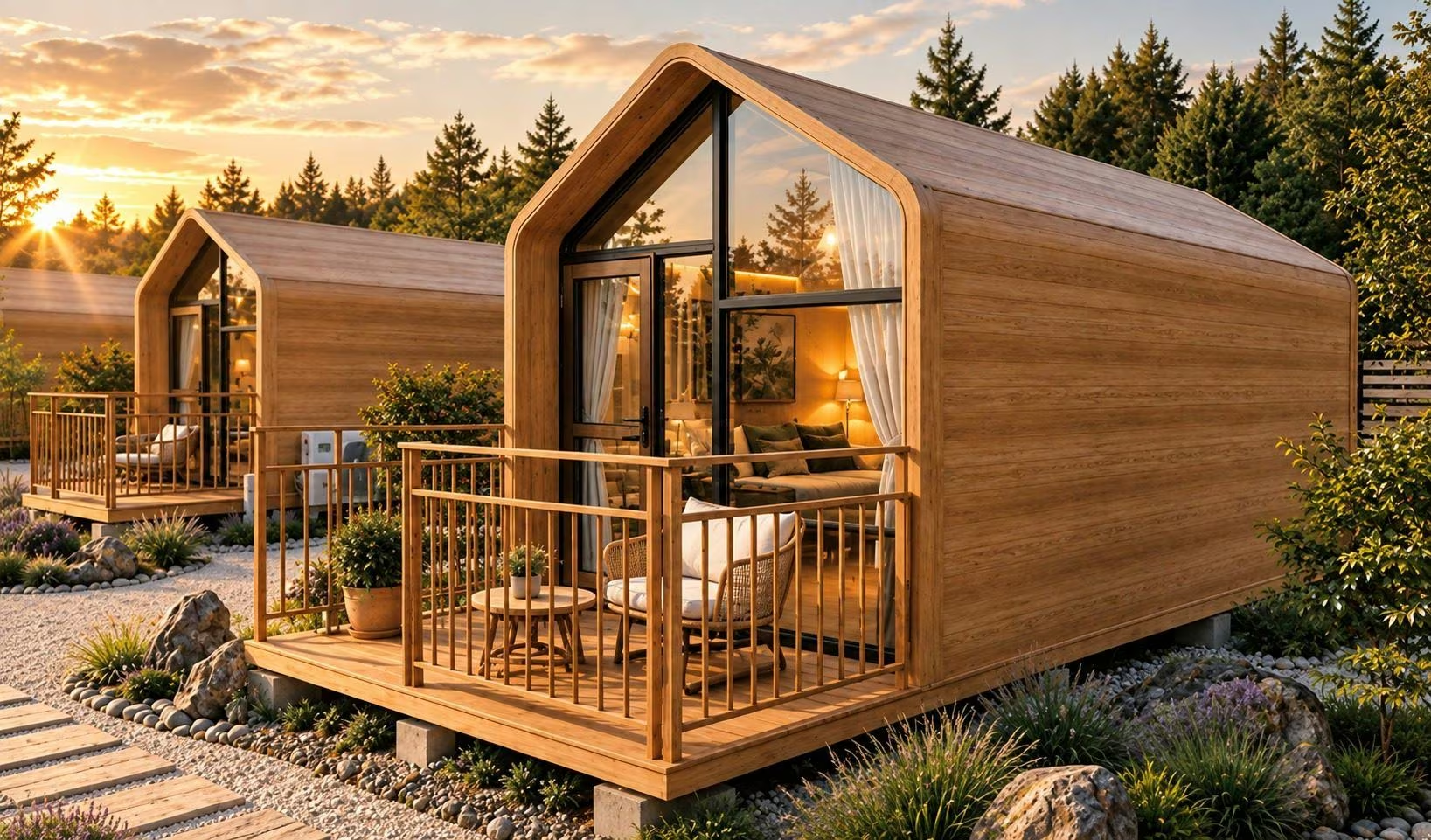
A tiny house built for tourism isn't rented out for its compactness alone: its distinctive architecture can be a genuine rental argument, but it never replaces a methodical, plot-by-plot assessment before investing.