No modular accommodation, whether a tiny house, a house, or a unit designed for outdoor hospitality, is profitable by nature. Its rental performance depends on a set of criteria that are better assessed by yourself before purchase than discovered afterwards. Investing is one of the main NÖMA project types, alongside living, hosting or working, presented in our reference article on what a turnkey modular home really covers. We already detailed a first application of this method for the specific case of a tiny house intended for seasonal tourist rental in our article investing in rental accommodation: what follows generalises its principles to any modular accommodation investment project, whatever the model or intended operating model.
Understanding the topic
The first criterion is location, and more specifically how well it matches the intended operating model. A property intended for short-term tourist rental needs to sit in an area where genuine demand exists at certain times of year. A property intended for long-term rental depends more on proximity to employment hubs or transport links. A professional-use project (hosting groups, staff housing, a business extension) follows a different siting logic altogether, tied to the company's premises or operating site rather than a tourist catchment area. The same location can therefore be excellent for one use and unsuited to another: the question is never "is this a good location?" but "is it good for the use I have in mind?".
The second criterion is the seasonality of demand. Accommodation in a highly touristic area in summer can show excellent occupancy over a few months and sit largely empty the rest of the year; a long-term rental property follows a more stable demand pattern, but is subject to other risks (tenant turnover, vacancy between leases). In both cases, the same good practice applies: think in terms of a realistic annual average rather than the best period, and never extrapolate a one-month occupancy rate to the whole year.
Deep exploration
The third criterion, often underestimated, is recurring operating cost. It varies by operating model: cleaning, booking management, rental-specific insurance and tourist tax for tourist accommodation; routine maintenance, letting management and vacancy between tenants for long-term rental; maintenance and running costs specific to the activity for professional use. Whatever the case, these costs need to be deducted from gross income before judging a project's real profitability: an attractive purchase price says nothing, on its own, about what will be left once these costs are paid.
The fourth criterion is local regulation, which varies significantly from one municipality to another and depending on the intended use. Some areas tightly regulate short-term seasonal rental, require registration, or cap the number of nights a secondary residence can be rented per year; other rules apply to long-term rental or to certain professional uses, such as staff housing. We don't provide legal advice on this point: before starting a project, it's essential to check with your local town hall or a legal professional on the precise rules that apply to your site and intended use.
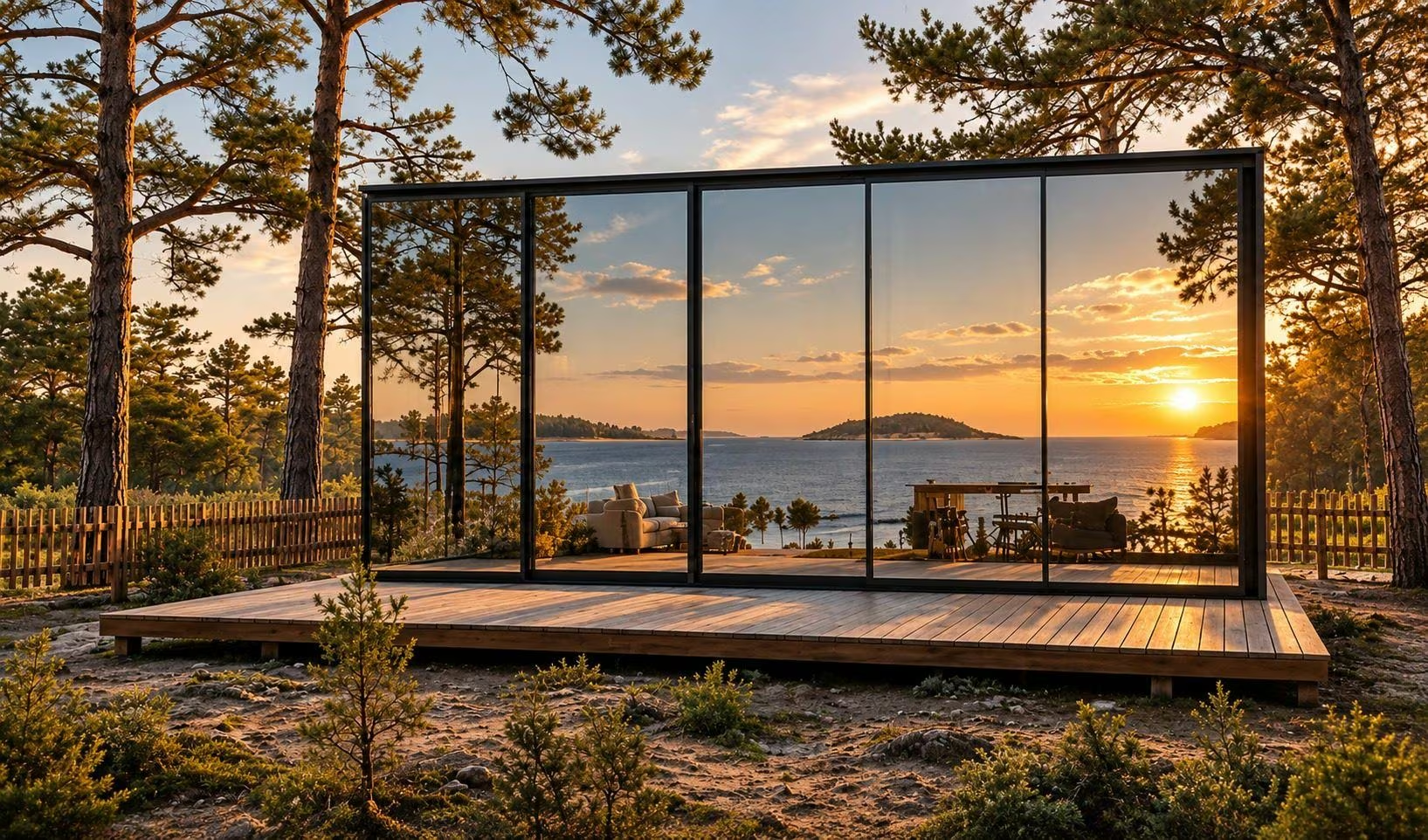
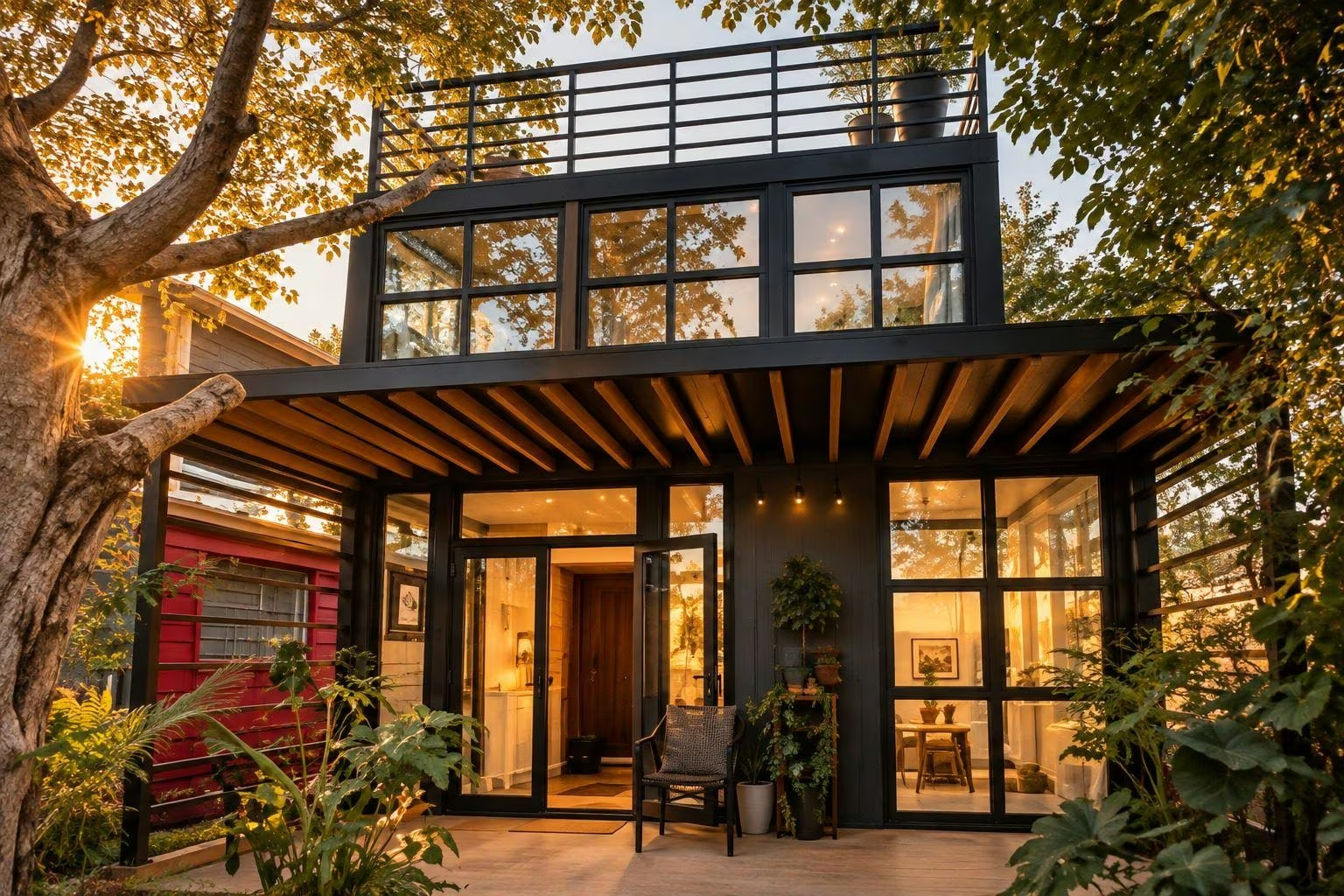
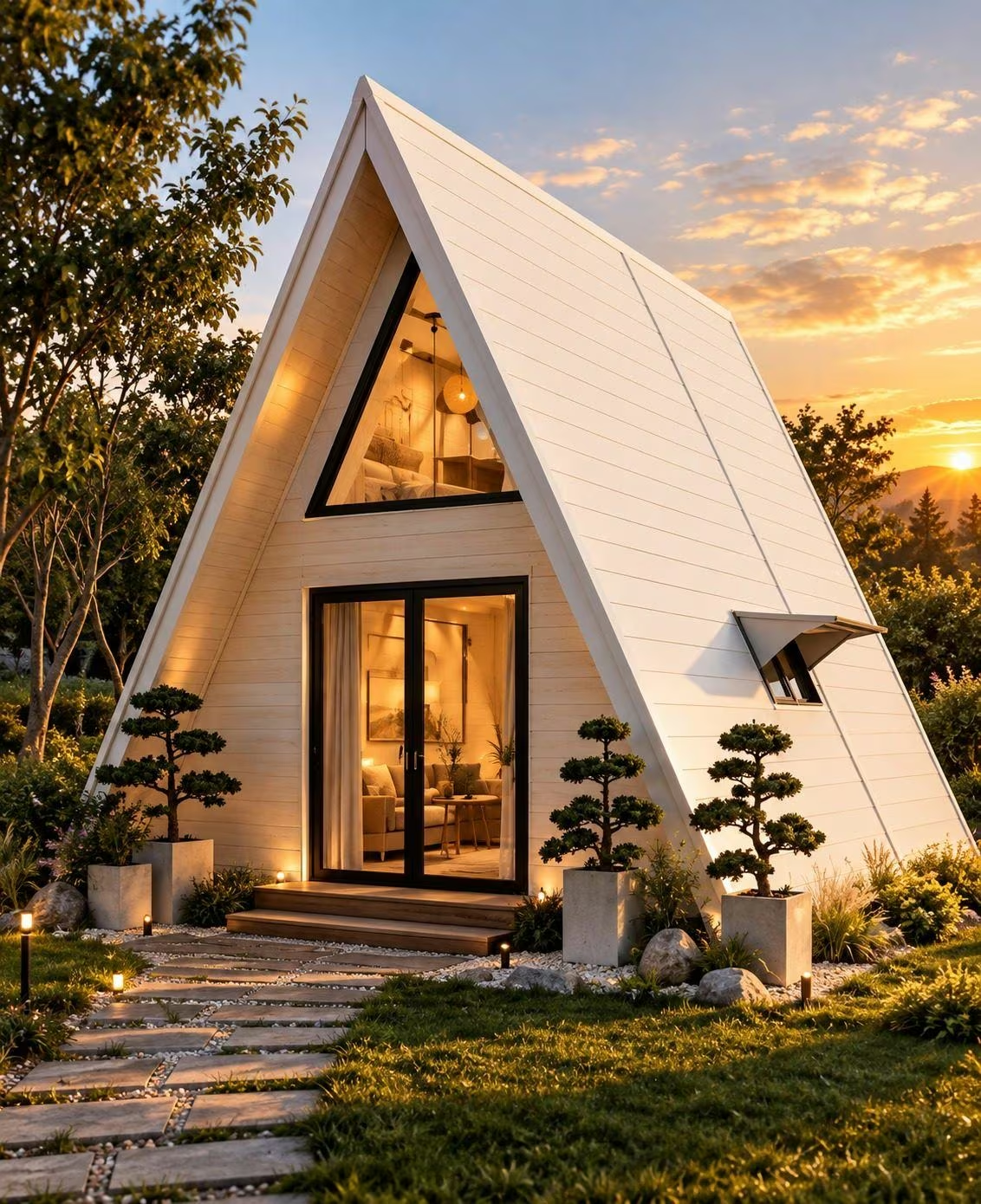
The fifth criterion, often overlooked next to the financial calculations, is the architectural appeal of the habitat itself. Accommodation with distinctive architecture and visible build quality generally rents more easily, and at a higher rate, than standardised accommodation: a qualitative factor that weighs as much as location in a tenant's or traveller's decision. That's precisely the positioning of models designed for rental operation, such as Frame within the Resort collection, or Level, whose panoramic deck is a rental argument in its own right.
Practical guidance
These five criteria, location, seasonality, operating costs, local regulation and architectural appeal, don't replace a personalised study specific to each plot and project. They do, however, help you build your own evaluation grid before any purchase, rather than relying on an advertised yield without checking it. We don't provide occupancy rates or yield figures specific to our habitats: these depend on too many factors specific to each site, local market and operating model to be reliably generalised, and we'd rather help you build them yourself, criterion by criterion, than offer a figure that wouldn't apply to your project.
For a concrete application of this method to a specific case, that of a tiny house intended for seasonal tourist rental, our article investing in rental accommodation details each of these five criteria in that particular context. If you'd like a first order-of-magnitude estimate for your own project, our Invest section offers an indicative yield simulator, to refine afterwards with your own study. You can also configure your project directly from our configurator.
Architectural perspective
A successful rental investment is never the result of chance or an advertised yield: it's the outcome of a method applied before purchase, project by project, rather than after.