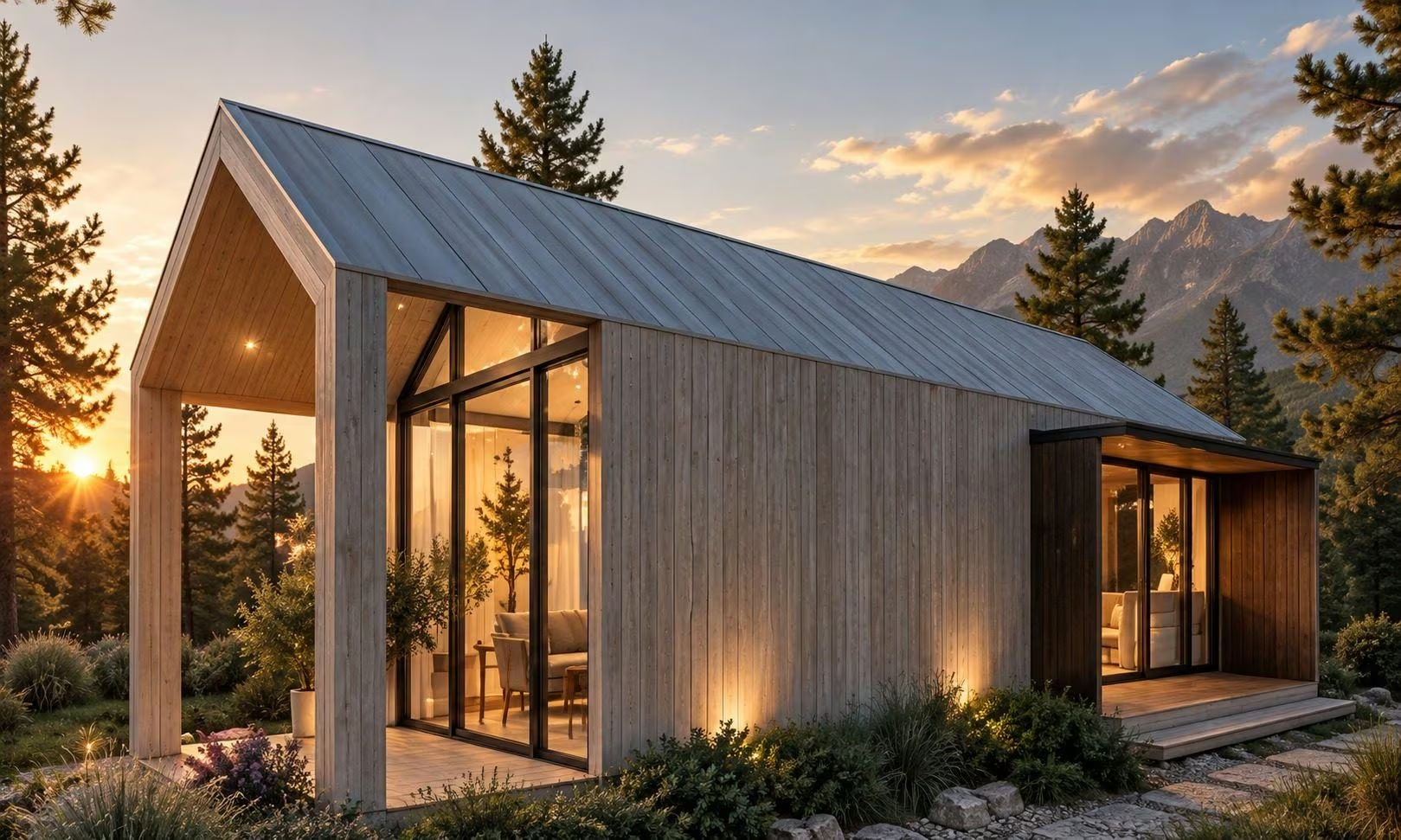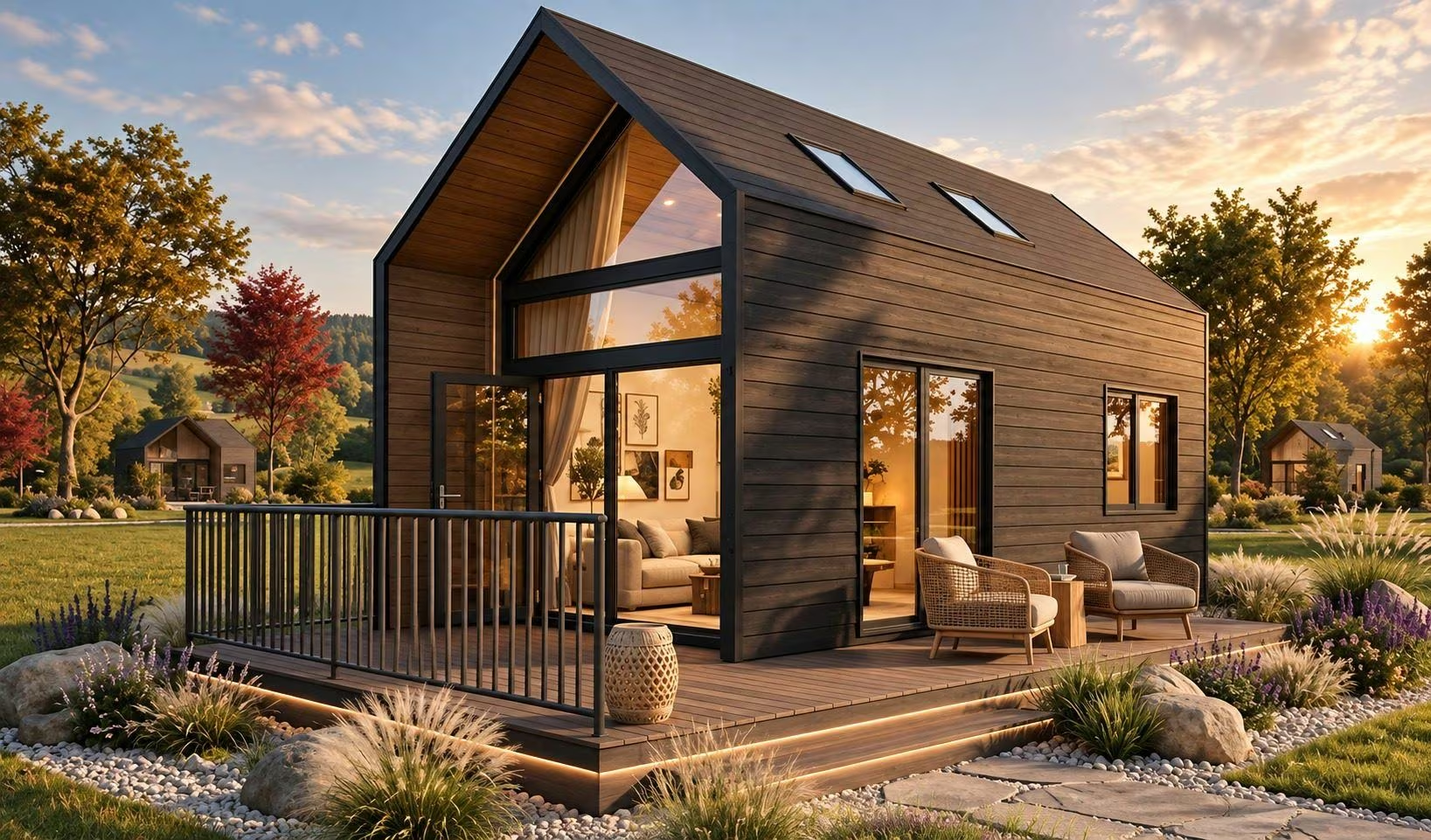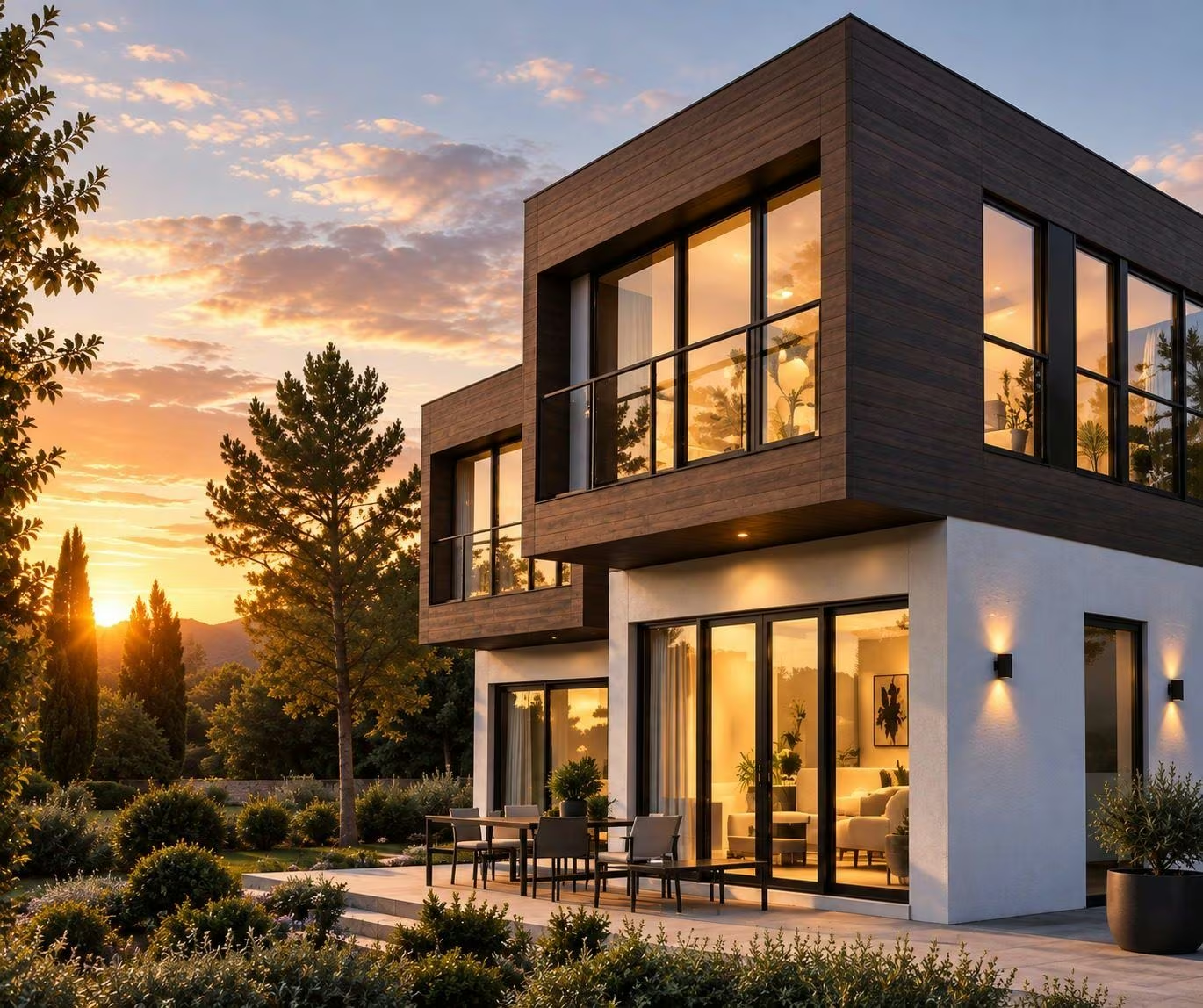
Galvanised steel structure, treated timber cladding, large glazed openings: a previous article already explained why these three materials make up the envelope of a NÖMA modular home. The question that follows is a different one: how does each of them actually behave once the home is installed, year after year, and what does that genuinely ask of you in return? That is the only question this article addresses. We do not go back over the composition already covered in wood, steel, glass: understanding the materials of durable architecture.
Understanding the topic
Exterior timber cladding is not rated in a single, uniform way: professional technical references for the sector (notably the French technical document FD P 20-651) classify it by use class, which depends on the wood species, the cladding's design (ventilation, water drainage) and the local climate. Some species naturally meet their use class; others need a preservative treatment to reach it. Over time, a facade greys under the combined effect of UV exposure and repeated contact with moisture: that patina is a normal evolution of the material, not a flaw, provided the wood never stays wet for long, which the quality of the installation detail (ventilation behind the cladding, water drainage) directly determines.
A hot-dip galvanised steel structure follows a different logic: a zinc layer applied in the factory protects the steel from corrosion, and that protection is backed by close to a century of field experience in structural steelwork. How long it lasts depends on the exposure environment (a coastal facade and a sheltered one do not age at the same rate), but under normal conditions, hot-dip galvanised steel needs no periodic maintenance to stay protected, unlike simply painted steel, which needs regular repainting.
Deep exploration
Glazing follows a third logic again. In a high-performance double-glazed unit, the low-emissivity coating that limits heat loss sits inside the sealed unit itself, on a protected face between the two panes: it is never in contact with outside air or with any cleaning product. What really determines the glazing's real-world lifespan is the airtightness and watertightness of the sealed unit itself, the criterion covered by the EN 1279 standard: as long as the seal holds, thermal performance stays stable. Its warning sign is visual and unambiguous: fog or condensation appearing between the two panes, rather than on their outer faces, signals a loss of seal integrity.
These three materials therefore call for two very different kinds of attention, worth keeping separate: an expected, harmless aesthetic evolution (wood's patina) on one side, and functional performance points worth watching (steel's corrosion protection, glazing's seal integrity) on the other. What we cannot state today, however, is a NÖMA-specific maintenance protocol with recommended frequencies or products: that information is not publicly documented at this time. Rather than improvising a generic answer, we would rather say so plainly and invite you to ask us directly for your specific model.
Practical guidance
Three principles remain transferable, whichever manufacturer you choose: never let an exterior wood surface stay wet for long, and check that the installation detail (ventilation, water drainage) actually allows that; do not read wood's natural greying as a flaw, unless it comes with softening or cracking of the wood itself, which then calls for a professional opinion; and watch for fog appearing between the panes of a double-glazed unit, the one reliable sign of a seal failure, rather than simple dust on the outer faces.
None of this replaces a professional opinion on a specific case, but it helps separate, on any modular home, what is a normal evolution of the material from what deserves a closer look. Every NÖMA home is also covered, from delivery, by documented warranties on the structure, weatherproofing and fittings, detailed in full on our trust and certifications page.
Architectural perspective
At NÖMA, we would rather say plainly what we cannot yet formalise publicly than improvise a maintenance protocol that sounds reassuring on paper without guaranteeing anything in practice. A well-chosen, well-installed material is expected to age. What matters is knowing how to tell what is evolving normally from what deserves a closer look.