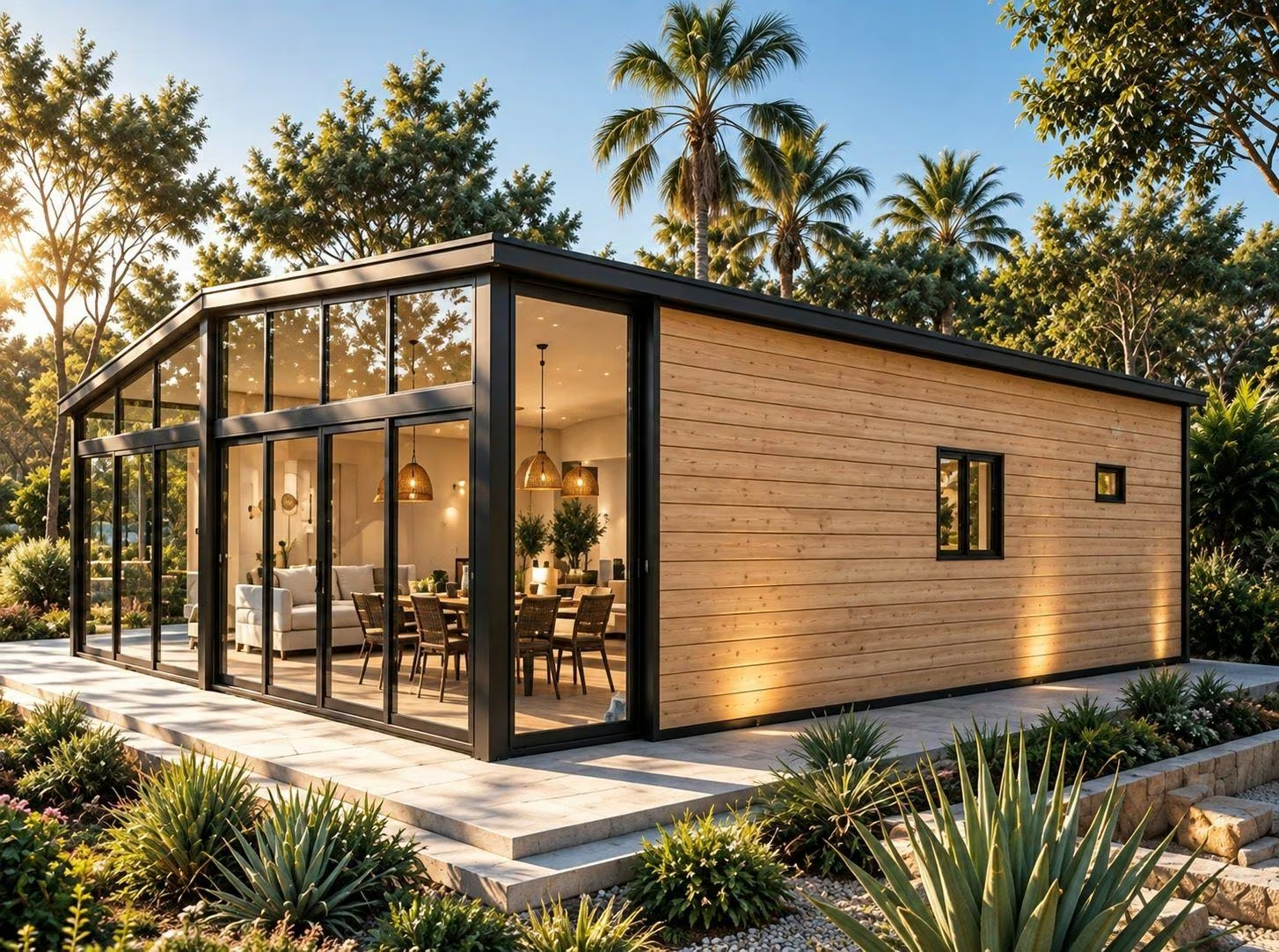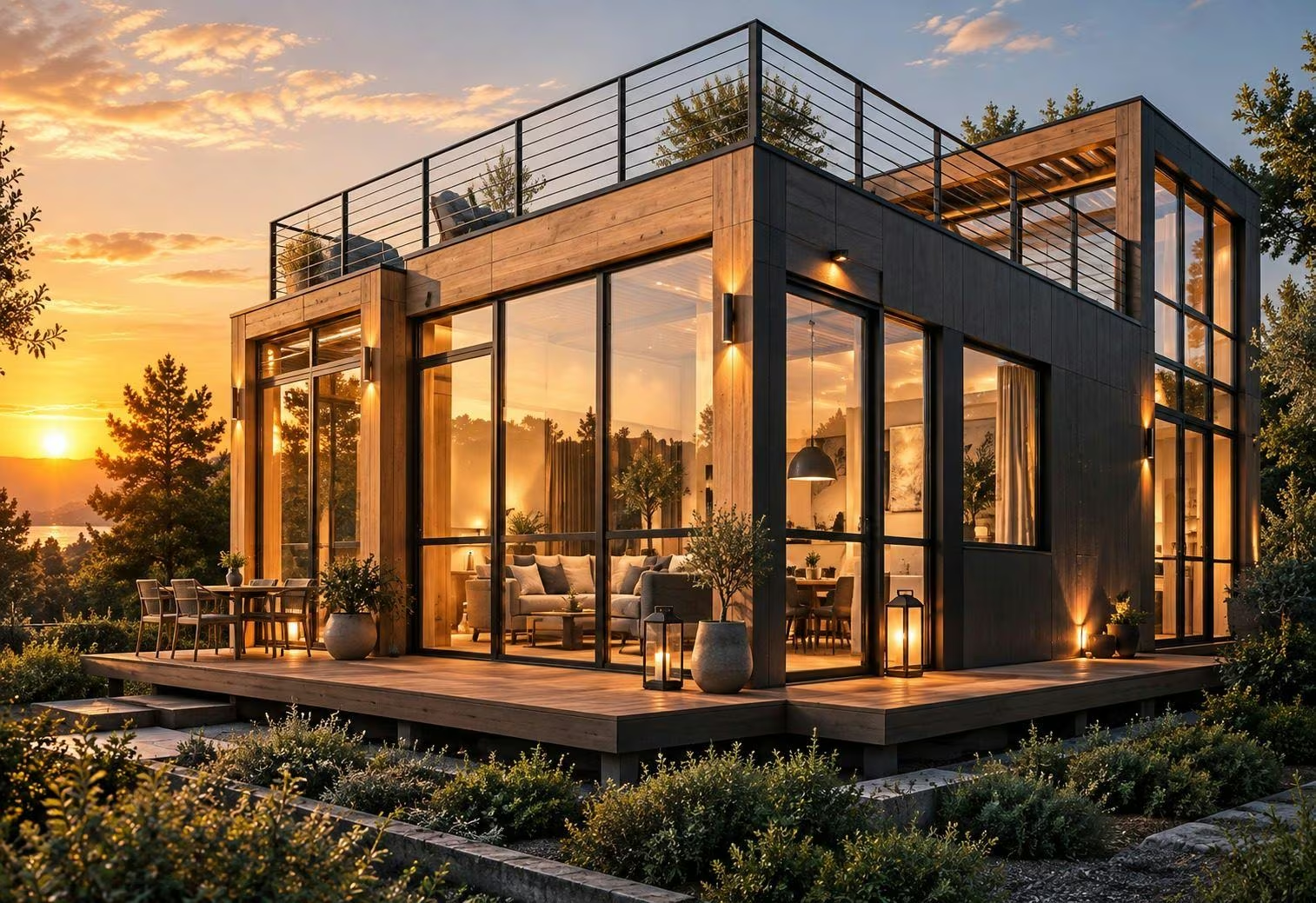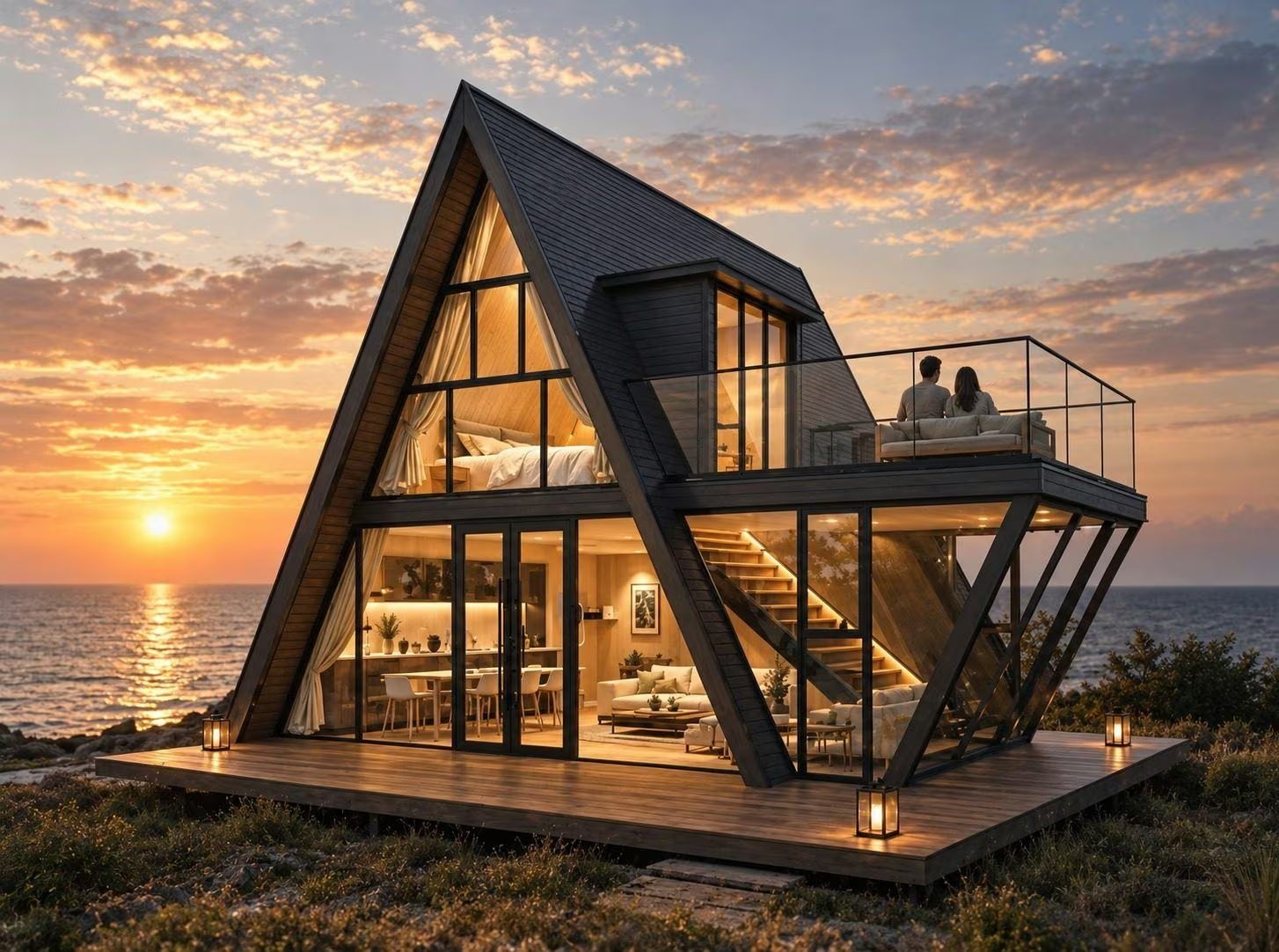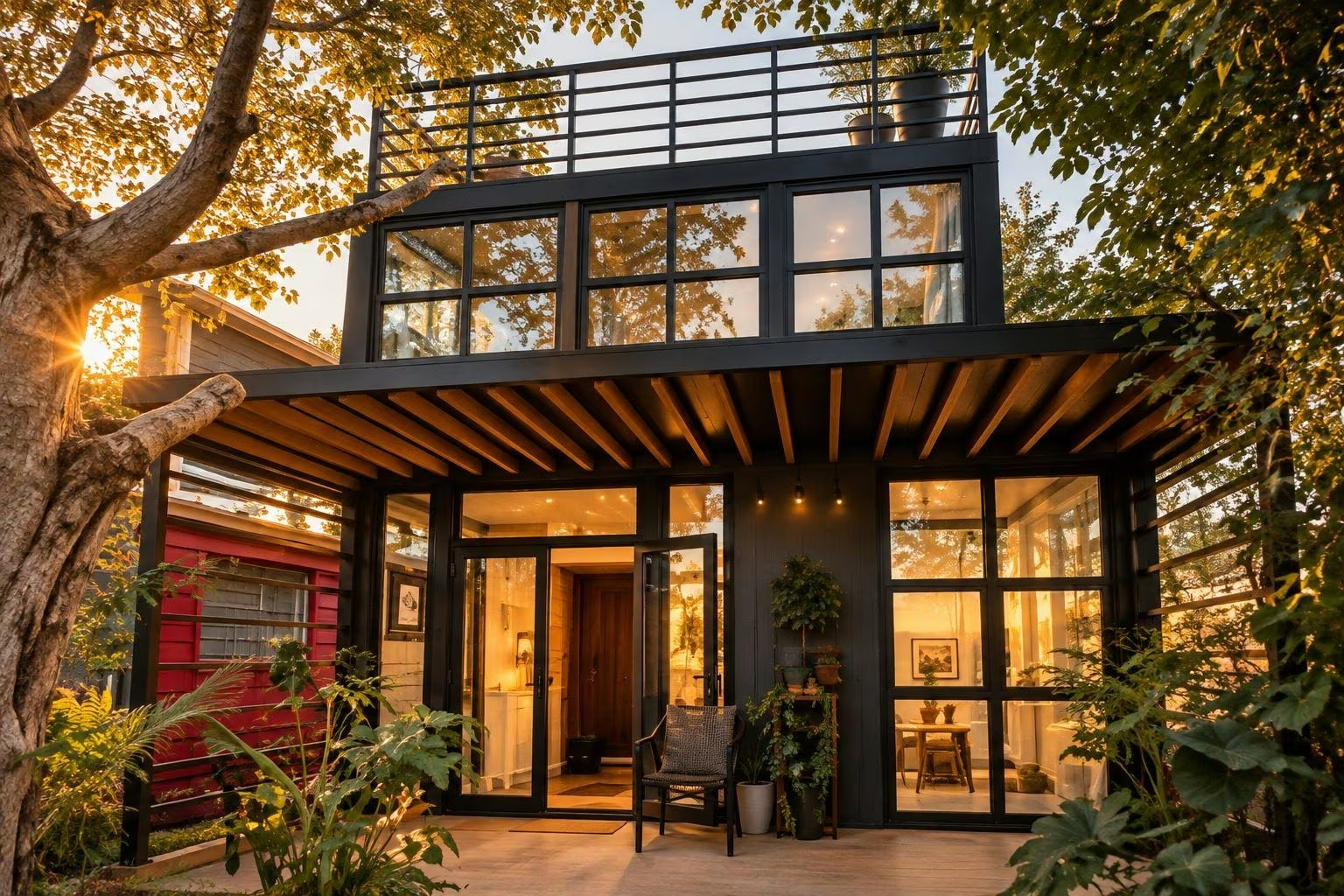
Prefabricated home, modular home, traditional construction: these three terms come up constantly in a building project, and they are often used as if they meant the same thing. They do not. Here is what actually changes depending on the method chosen, without trying to prove that one method is superior to the other.
Understanding the topic
Traditional construction refers to a building built entirely on its final site, from groundworks to roof. The different trades (masonry, framing, roofing, electrics, plumbing, finishing) work one after another, on the same site, each one having to wait for the previous trade to finish before starting its own work. It is the oldest and most widespread construction method, and it remains the reference for a large share of individual homes.
A prefabricated home is a broader term: it covers different off site construction methods, meaning methods where part of the work is carried out somewhere other than the final site, in a workshop or factory, before being transported and assembled in place. That ranges from prefabricated panels assembled on site to kit structures, including modular construction itself. Off site construction is not a recent idea: the principle dates back to the industrial revolution, but digital design methods have considerably expanded what can now be manufactured in a workshop.
Deep exploration
A modular home, finally, is a specific form of prefabricated construction: it is made of modules, volumes manufactured in a workshop in a near finished state (structure, insulation, joinery, and often a large share of the indoor systems), before being transported and assembled on site. Not all prefabricated construction is modular in the strict sense, but every modular home is a form of prefabrication. This distinction, already set out in our article on what a turnkey modular home actually includes, is the necessary starting point for comparing the methods in any useful way.
What actually changes is how the project is organised over time. In traditional construction, almost all of the work happens on site, exposed to weather and to the coordination challenges of trades that follow one another in sequence. In off site construction, a significant share of the shell and indoor systems is built in a workshop, sheltered from the weather, while site work (access, foundations or a slab if needed, utilities) can move forward in parallel on the plot. This ability to run in parallel stages that, in traditional construction, have to follow one another is what most concretely sets the two approaches apart.
Practical guidance
This different way of organising the work does not, however, allow us to conclude that one method is faster, cheaper or better built than the other in absolute terms: it depends on the project, the site, the level of customisation sought and the manufacturer or company chosen. The real lead time of a project, whether modular or traditional, depends on factors specific to each project and is communicated in the quote rather than announced as a general figure. This comparison remains deliberately general: it does not replace a personalised assessment of your own project.
To compare two offers without confusing method with method, it is better to check what each one actually covers rather than relying on the single word "prefabricated" or "traditional". In both cases, the land itself, connections to public utility networks and administrative procedures (a prior declaration or planning permission depending on surface area) remain steps in their own right, whatever construction method is chosen for the building itself. Both methods of new construction are also subject to the same environmental requirements, as we cover in our article on what RE2020 changes for housing. Our Maison collection details, model by model, what is included in a turnkey modular home, and our pricing page gives the associated starting prices.
Architectural perspective
Comparing two construction methods only has value if the comparison stays honest about what it can and cannot settle: there is no universally better method, only the one that best fits a given site, timeline and project.