When a company needs extra professional floor space, offices, a meeting room, a reception area or a coworking space, the first option that comes to mind is often a traditional property extension. Does a modular office really meet the same need, without the constraints of a prolonged traditional building site? That's the question worth settling before comparing two quotes, not after.
Understanding the topic
Before comparing solutions, it helps to clarify what is actually needed. A company short on professional floor space can need very different things: an independent office for a growing team, an extra meeting room, a shared coworking space, or a visitor reception area separate from existing premises. The right sizing depends on this precise use, not just on the number of square metres available.
A traditional property extension, for its part, follows a building site that unfolds on the company's own premises: groundworks where needed, shell construction, second-fix work, then finishing, with the disruption (noise, dust, restricted access) that comes with a prolonged building site on an active premises. This isn't down to a poor contractor: it's simply the nature of construction carried out entirely on site, from start to finish.
Deep exploration
A modular office changes part of this equation, without changing its purpose. The volumes are manufactured in a workshop and then installed on the company's site, which limits the share of work carried out directly on location, with installation presented by Nöma as quick and without major works. Thermal and acoustic insulation, highlighted as a strength of this offer, meets a concrete office need: the quiet needed for concentration, in a space that remains customisable (layout, finishes) to match the company's activity and brand image.
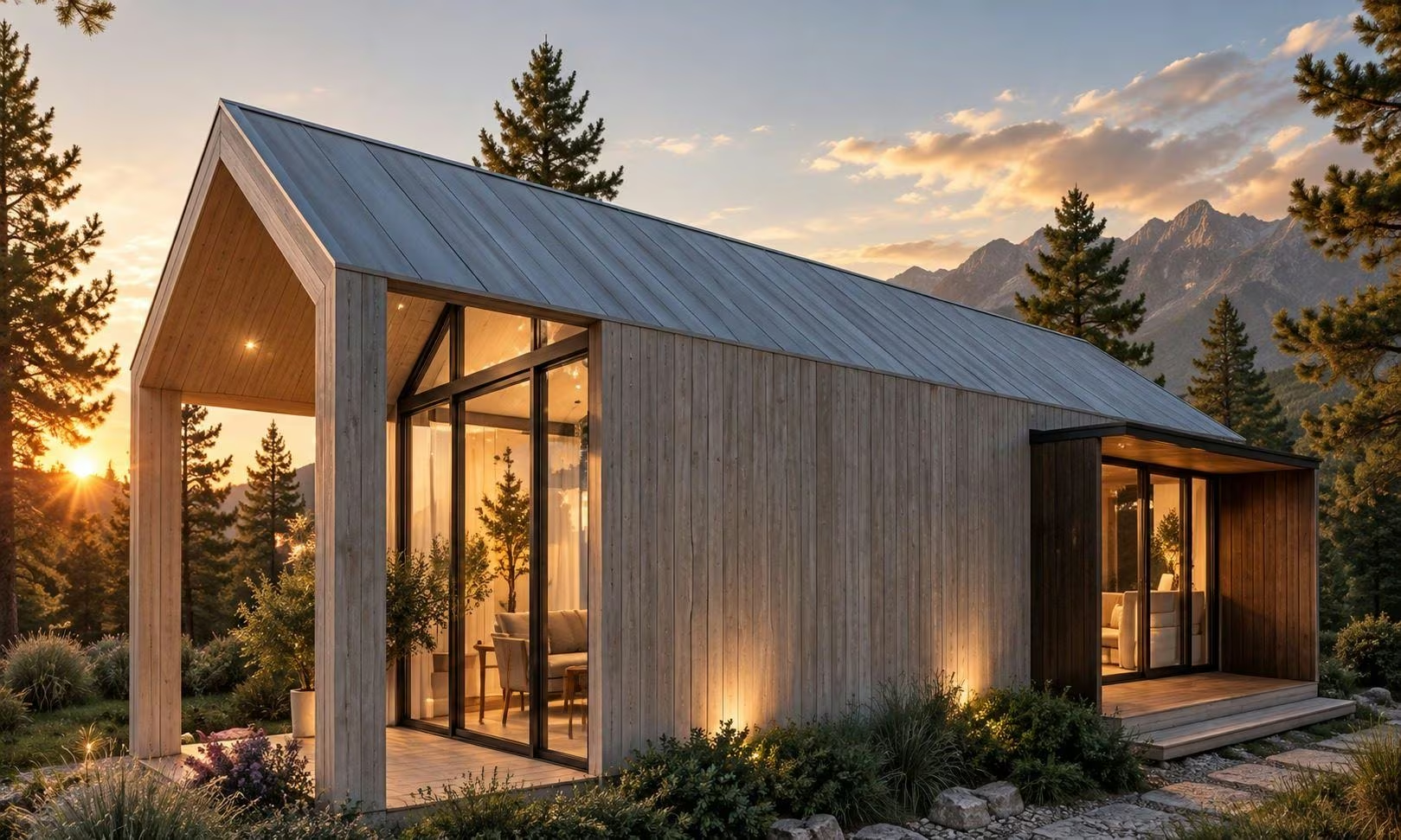
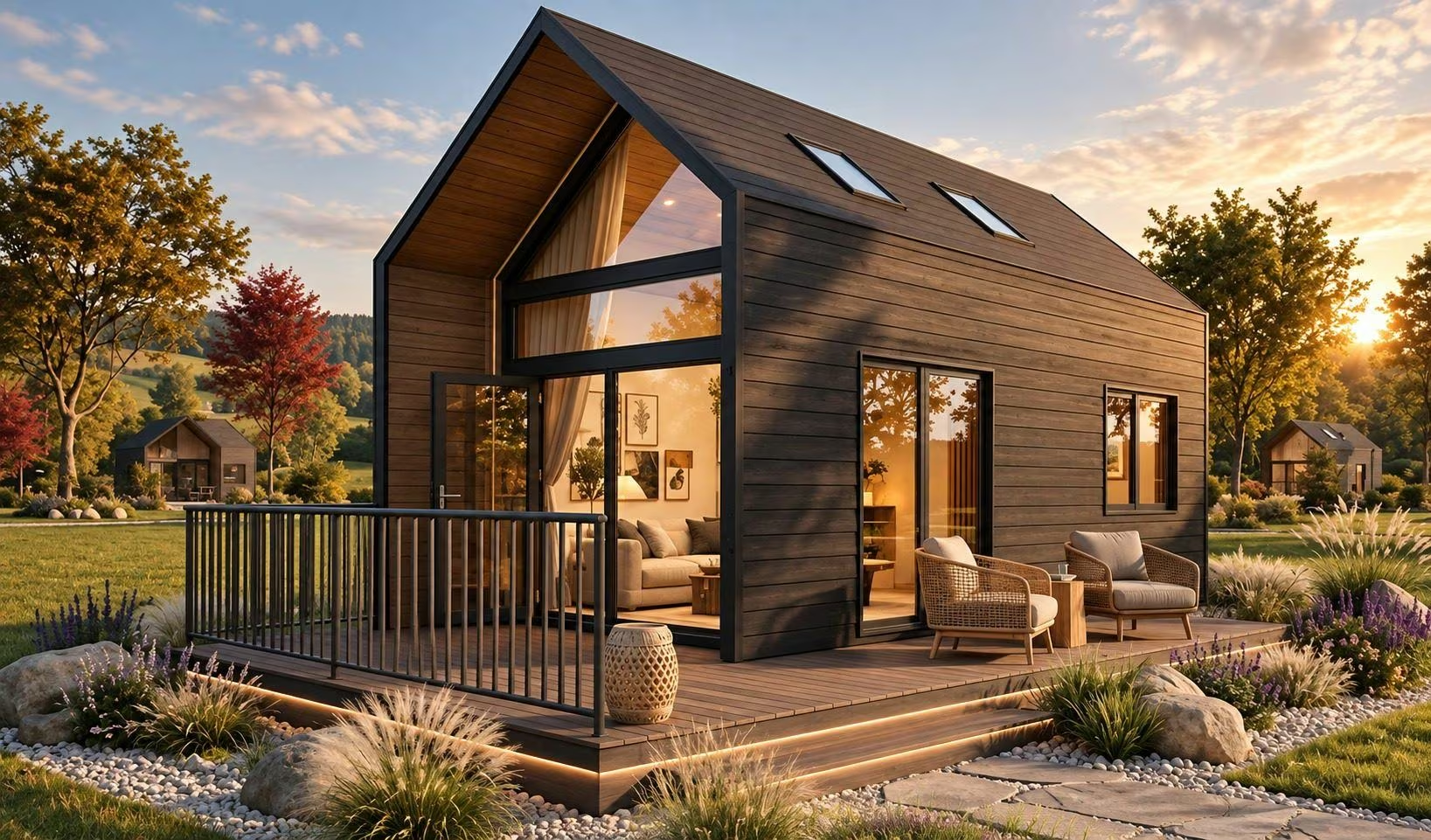
Two Nöma ranges serve different needs in this sector: the Tiny Collection, compact and bright, for an independent office or a meeting room; the Maison Collection, for more generous coworking or reception spaces. Both share the same logic of mobility and scalability: moving or expanding the space remains possible as teams grow, an advantage a traditional property extension, fixed to its plot, doesn't offer in the same way.
Practical guidance
What the modular offer doesn't change, however, is the project's own scope. The site itself, connections to public utility networks and administrative procedures remain, as with any Nöma project, the company's responsibility, coordinated with a local professional. Manufacturing lead times aren't published as a public figure: they're communicated once the quote is drawn up, not given as a generic figure before the project has been defined.
Comparing a modular office to a traditional extension therefore means asking the right questions before the price: what real use is intended (independent office, meeting room, coworking, reception), what scope is included in the offer, and what procedures remain the company's responsibility. Nöma offers to assess these needs sector by sector on its Offices & professional spaces offer.
Architectural perspective
A modular office isn't a smaller version of a traditional building site: it's a different project scope, designed to move fast without sacrificing working comfort. It's up to each company to choose the scope that truly matches its need, not the most general promise.