A campsite or outdoor hospitality operator considering adding tiny house type accommodation units to their site benefits from treating the project as a structured investment, not as a simple equipment purchase. What a supplier like NÖMA covers (designing and manufacturing the units) and what remains the operator's responsibility (land, utility connections, administrative procedures, day to day operation) do not fully overlap, and confusing the two is the costliest mistake at this stage. This article structures the questions to ask before starting this type of installation, without relying on any documented NÖMA track record for this specific type of project to date.
Understanding the topic
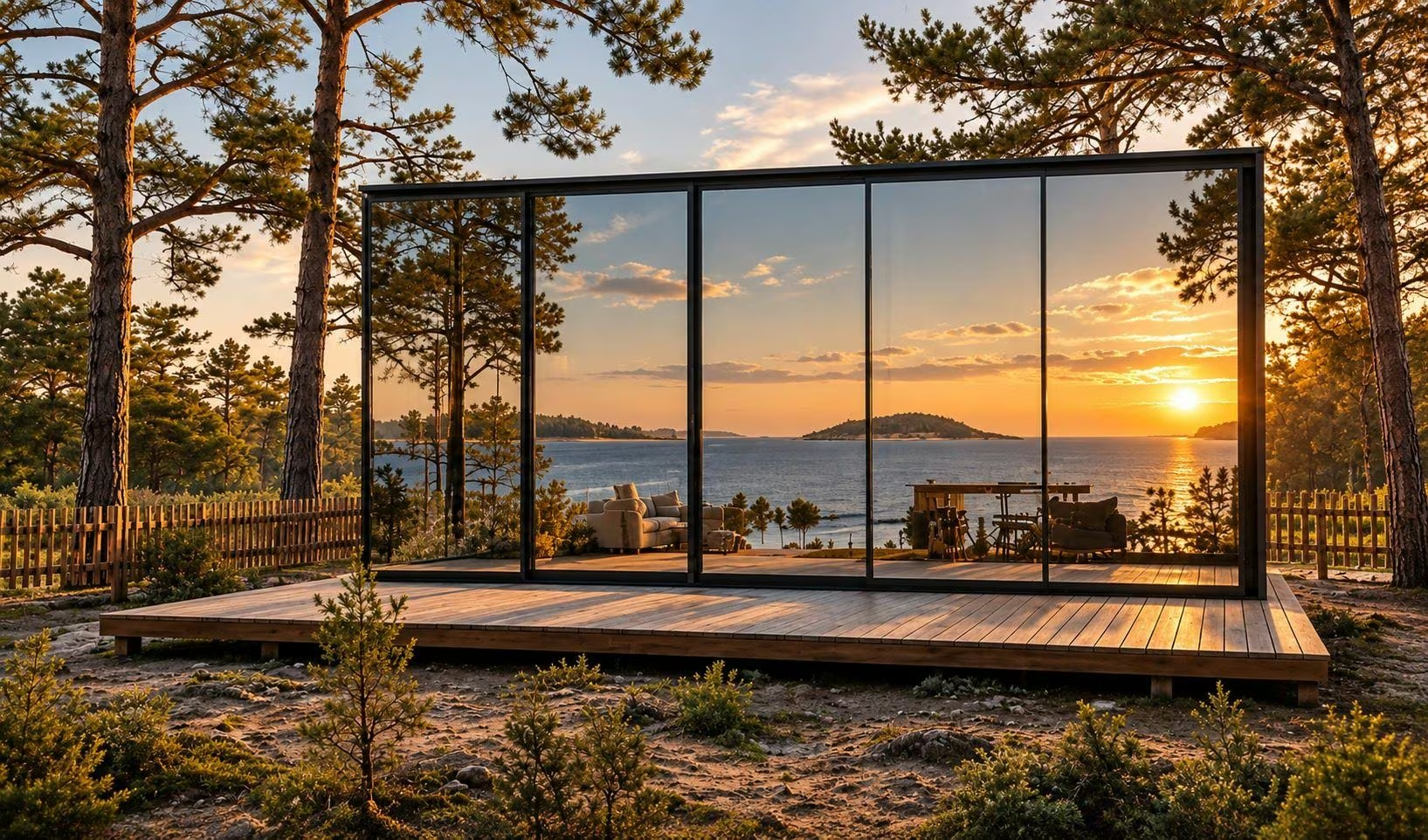
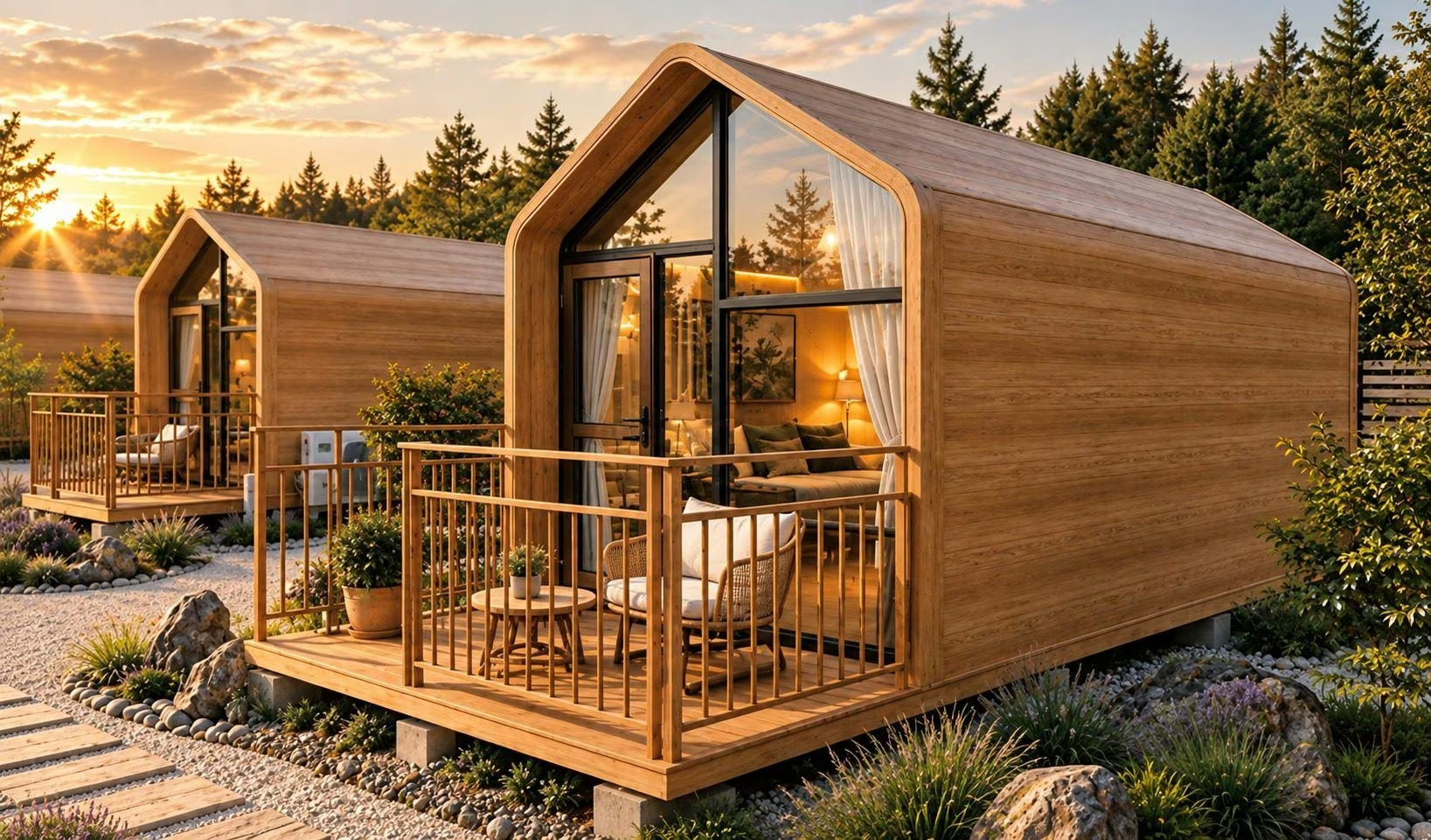
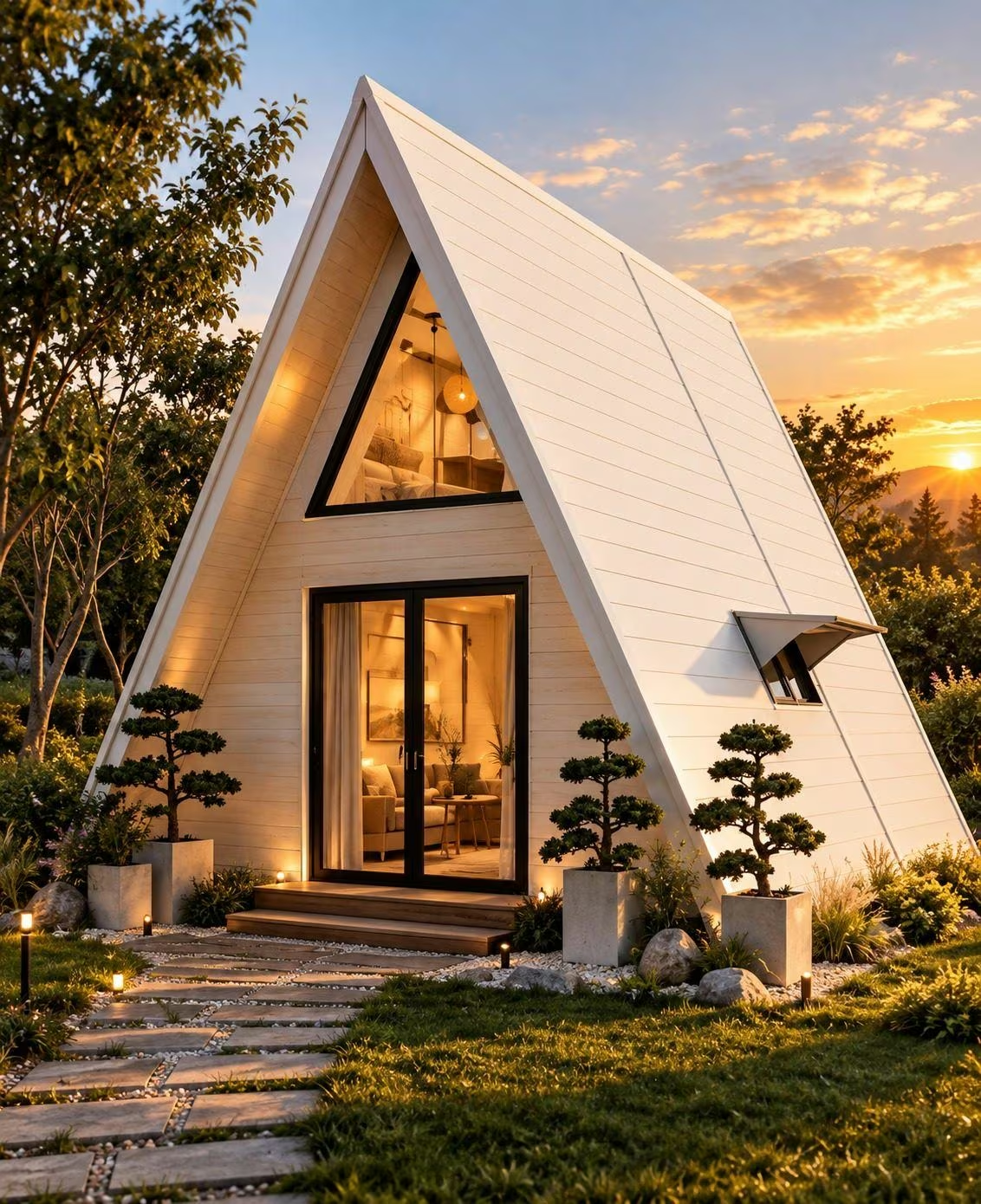
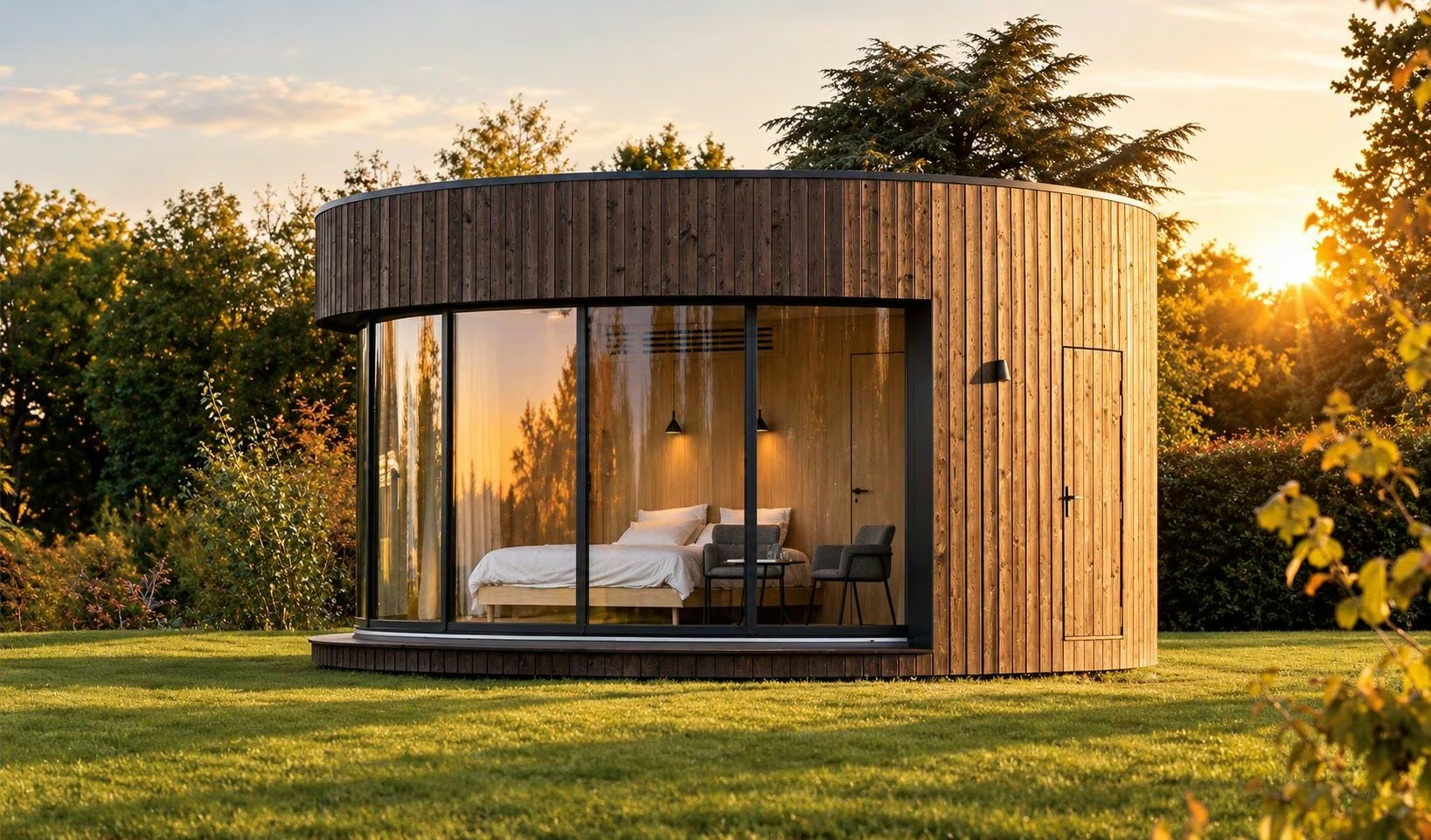
Adding accommodation units to an existing campsite changes the structure of the establishment itself: the number of operated pitches changes, the accommodation offer diversifies, and the targeted guest profile can shift toward a more experience driven clientele. Within its Resort Collection dedicated to outdoor hospitality, NÖMA offers units such as Span, Pod and Frame, positioned for this type of intensive, four season operation rather than for individual residential use. Choosing the model or models depends on the surface area available per pitch, the comfort level targeted and consistency with the site's existing offer: criteria specific to each site, which a dedicated project study can clarify rather than assume.
Adding accommodation to a campsite falls under a specific regulatory framework, distinct from that of an individual house. According to information published by the French Directorate General for Enterprise (Ministry of the Economy), operating a developed campsite or a leisure residential park requires prior authorisation from the town hall of the site's location once the site exceeds six pitches or twenty people. If the number of operated pitches increases by more than 10%, a new classification request must be filed with the competent administrative authority (Article D.332-4 of the Tourism Code): a project adding several units can therefore trigger this requirement, depending on its scale.
Deep exploration
French law also distinguishes between habitations légères de loisirs (HLL, lightweight leisure dwellings), whose number is capped on a standard campsite (fewer than thirty five units where the site has under 175 pitches, or 20% of the total number of pitches, under Article R.111-38 of the Town Planning Code), and mobile leisure residences, subject to other restrictions depending on how the pitch is occupied (Article R.111-44). The exact classification of NÖMA units under this distinction (HLL or mobile residence) is not publicly documented to date: data unavailable, to be verified model by model with NÖMA and confirmed with the relevant town hall's planning department before filing any application. This article does not constitute legal advice.
As with all NÖMA ranges, the turnkey delivery covers what makes a unit habitable (structure, insulation, interior electricity and plumbing, a fitted kitchen, a fitted bathroom, a water heater) but never covers the land, connections to public water and electricity networks, or administrative procedures: these three elements always remain the operator's responsibility, to be arranged with a local professional, in coordination with NÖMA for scheduling. For a multi unit project on a campsite, this means planning each pitch's utility readiness early rather than treating it as a secondary step once units have been ordered.
The number of units to deploy depends on the available surface area, the targeted clientele and the regulatory thresholds mentioned above (the HLL quota, the 10% threshold triggering a new classification): an oversized project relative to these thresholds can complicate operations more than it improves profitability. This sizing question, specific to each site, goes beyond the scope of this article and is best addressed case by case with a NÖMA advisor.
Practical guidance
Once a project is up and running, operating it over time raises its own questions: maintaining the accommodation fleet, managing seasonality or moving to four season operation, and maintaining materials exposed to outdoor conditions. These topics go beyond the initial project structuring covered here and deserve dedicated treatment; manufacturing lead times for the units themselves are not published as a general fixed duration and are communicated with each quote, specific to each project.
Before launching a tiny house installation project on a campsite, the following points are worth checking: the authorisation regime applicable to your site with your town hall, the exact regulatory classification envisaged for the units with your NÖMA contact, the availability and cost of utility readiness for each pitch, and the number of units compatible with your site's regulatory thresholds. Since rules differ by campsite and by municipality, a professional project study helps clarify these points before any commitment.
Architectural perspective
At NÖMA, we believe a well structured B2B project starts with a clear separation of responsibilities: ours is designing and manufacturing the units, the operator's is the land and its readiness, and everyone's is to verify their own regulatory scope before committing.