An operator of a campsite or outdoor hospitality site who is considering diversifying their offering often asks the same question: is a tiny house a form of glamping? The factual answer is no, and the distinction isn't just a matter of vocabulary: it affects the property's regulatory status, its level of habitability, and how it can be operated. This comparison sets out objective criteria rather than pitting two accommodation families against each other, each of which answers a real demand.
Understanding the topic
The term "glamping" is not a category recognised by French administration. In practice, the structures it covers (furnished tents, light cabins, demountable lodges) most often fall under the regime for habitations légères de loisirs (HLL, light leisure accommodation). Article R.111-37 of the French Code de l'urbanisme defines them as "demountable or transportable structures intended for temporary or seasonal leisure use." This demountable or transportable character, combined with temporary or seasonal use, is the central criterion that sets them apart from a more permanent construction.
A Nöma tiny house isn't designed on that principle. It's a habitat manufactured in a workshop and then installed on site, but designed and delivered as a complete living space rather than as a demountable structure for strictly seasonal use. Across the entire Tiny collection, indoor habitability (structure, insulation, joinery and glazing, indoor electricity, indoor plumbing, a fitted kitchen, a fitted bathroom, a water heater) is included at no extra cost. For the outdoor hospitality sector specifically, Nöma presents its accommodation as delivered turnkey, with an installation that doesn't require heavy foundations, and operation presented as possible year-round.
Deep exploration
Beyond the regulatory definition, four factual criteria make it possible to compare the two accommodation families concretely. Administrative status first: an HLL remains, by design, demountable or transportable and intended for temporary or seasonal use, whereas a modular habitat installed on site isn't meant to be dismantled between seasons. The level of indoor fit-out next: a glamping tent or light cabin doesn't necessarily offer the same completeness of fittings (electricity, plumbing, kitchen, bathroom) as a habitat designed for permanent habitability. The actual operating duration of the site, finally, depends less on the choice of accommodation than on the procedures and zoning applicable to each plot, which vary from one municipality to the next.
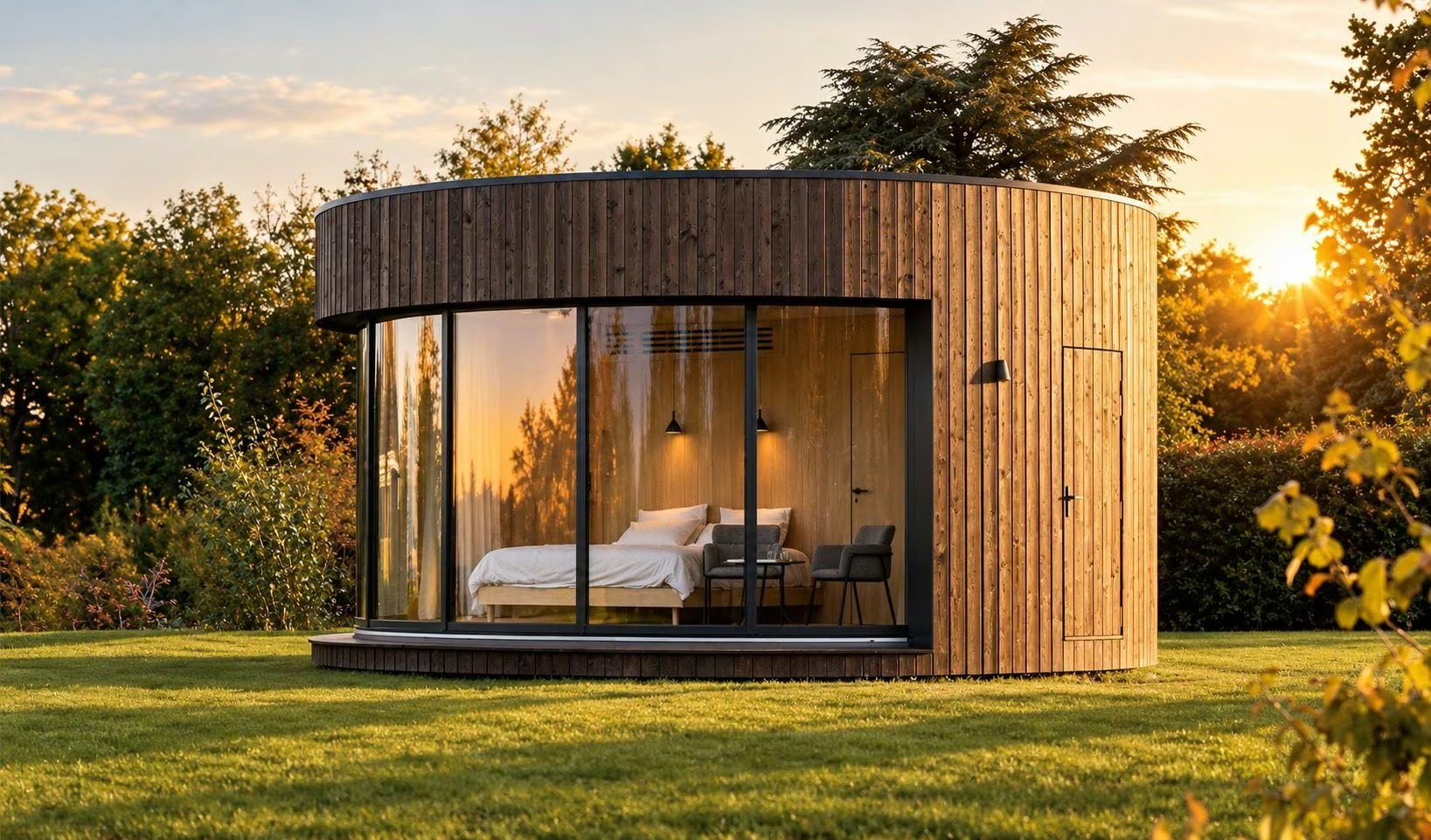
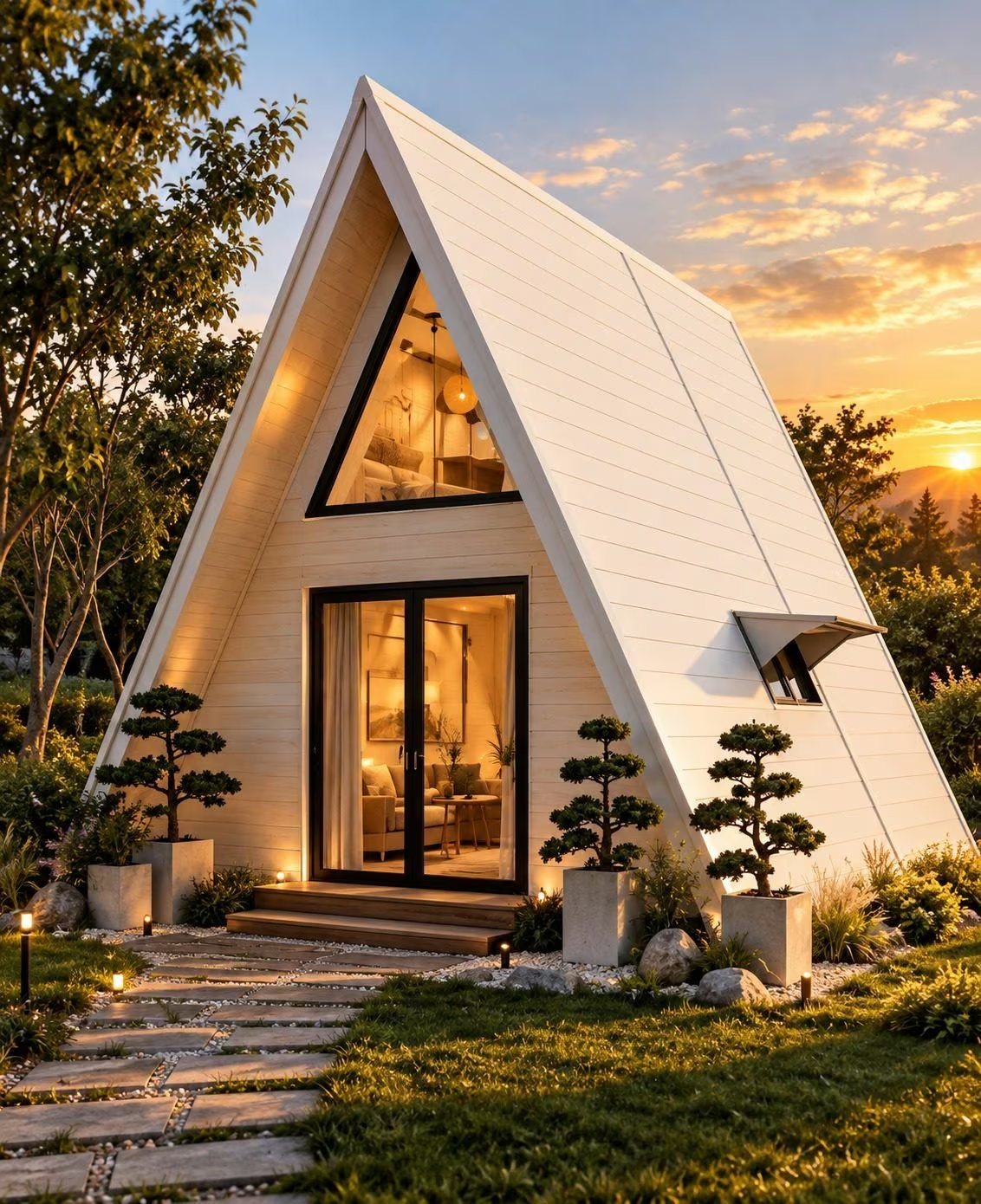
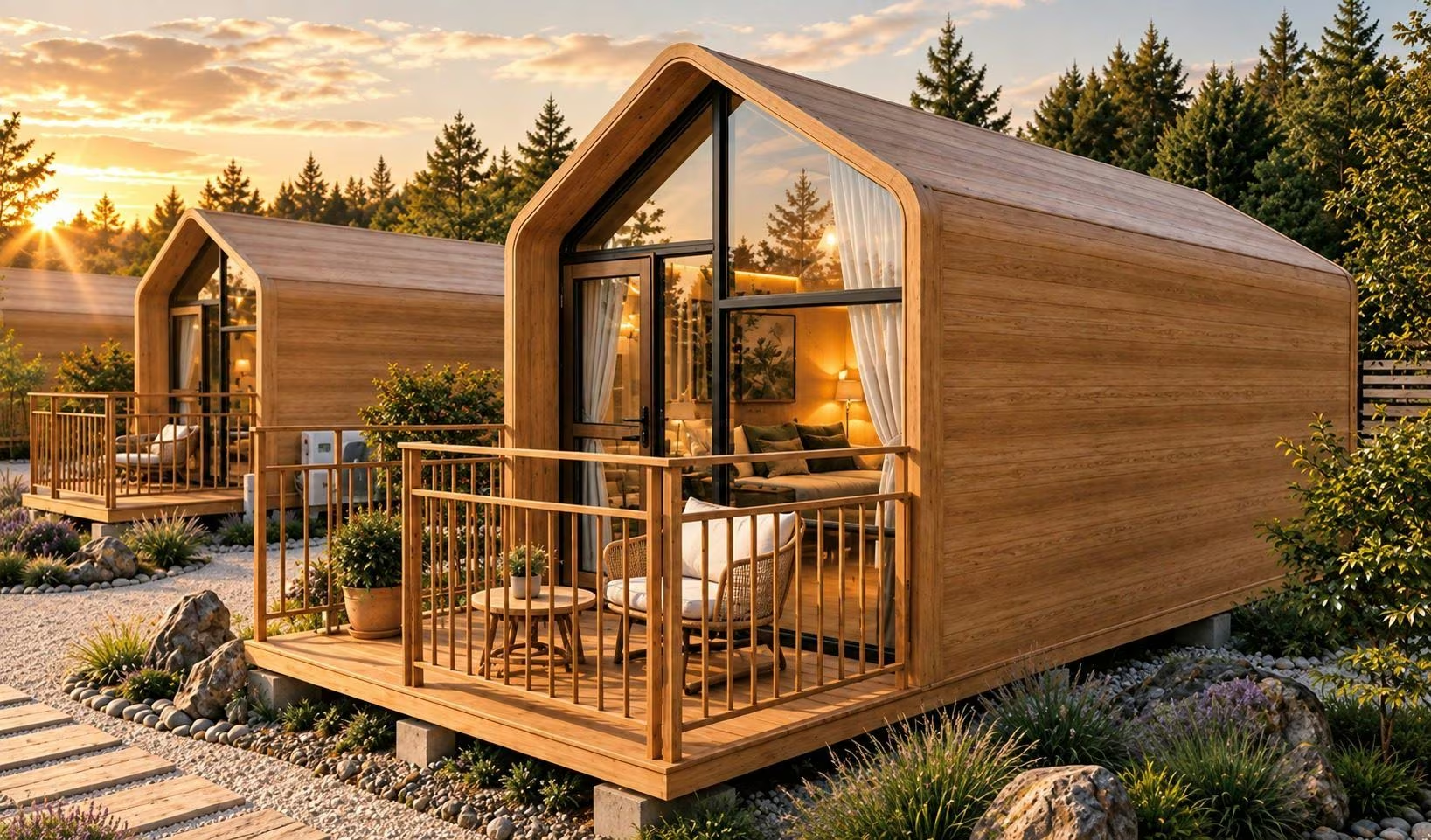
On the product side, Nöma offers two collections relevant to this sector. The Tiny Collection brings together fully equipped tiny houses, designed for a stay that is both unusual and comfortable. The Resort Collection, meanwhile, is described by Nöma as a selection built specifically for outdoor hospitality: it includes the Span, Pod and Frame models among others, each with a distinctive signature architecture. The Frame model, for example, sits in this collection with an A-frame design and a 33 m3 interior volume, but Nöma does not currently publicly document the detail of its indoor habitability in the same way as for the Tiny collection's models: this specific point should be checked directly with Nöma before any claim is made about it.
Practical guidance
Before choosing between the two approaches, several points deserve to be checked project by project rather than assumed. The applicable procedures (prior declaration, development permit or building permit) depend on surface area, number of pitches and local zoning, not solely on the type of accommodation chosen: our regulations and installation page details the general principles, but checking with the local town hall remains necessary for each plot. The operating duration actually achievable on a given site also depends on constraints specific to that site, which neither type of accommodation can bypass as a matter of principle.
In practice, the choice between glamping and a tiny house is less a matter of quality hierarchy than of alignment with the experience the target guests expect and with the site's operating model. Demountable, seasonal accommodation answers a different investment and flexibility logic than a modular habitat designed to last across several seasons. To explore the models Nöma has designed for outdoor hospitality, the Resort Collection presents this full selection.
Architectural perspective
At Nöma, we don't think of unusual accommodation as a temporary stand-in for a "serious" home: it's a category in its own right, one that can be designed with the same level of architectural ambition and comfort as a residential habitat. That choice is, in our view, what sets the Resort Collection apart from a simple glamping structure.